
Product Launch Comparison
DJI Dock 4 vs Dock 3: Launch Comparison for Canadian Drone Buyers
Compare DJI’s newly launched Dock 4 and Matrice 5TD with Dock 3: battery swapping, thermal cameras, mapping, cold-weather ratings and installation requirements.
Remote Robotic · October 14, 2026 · 10 min read
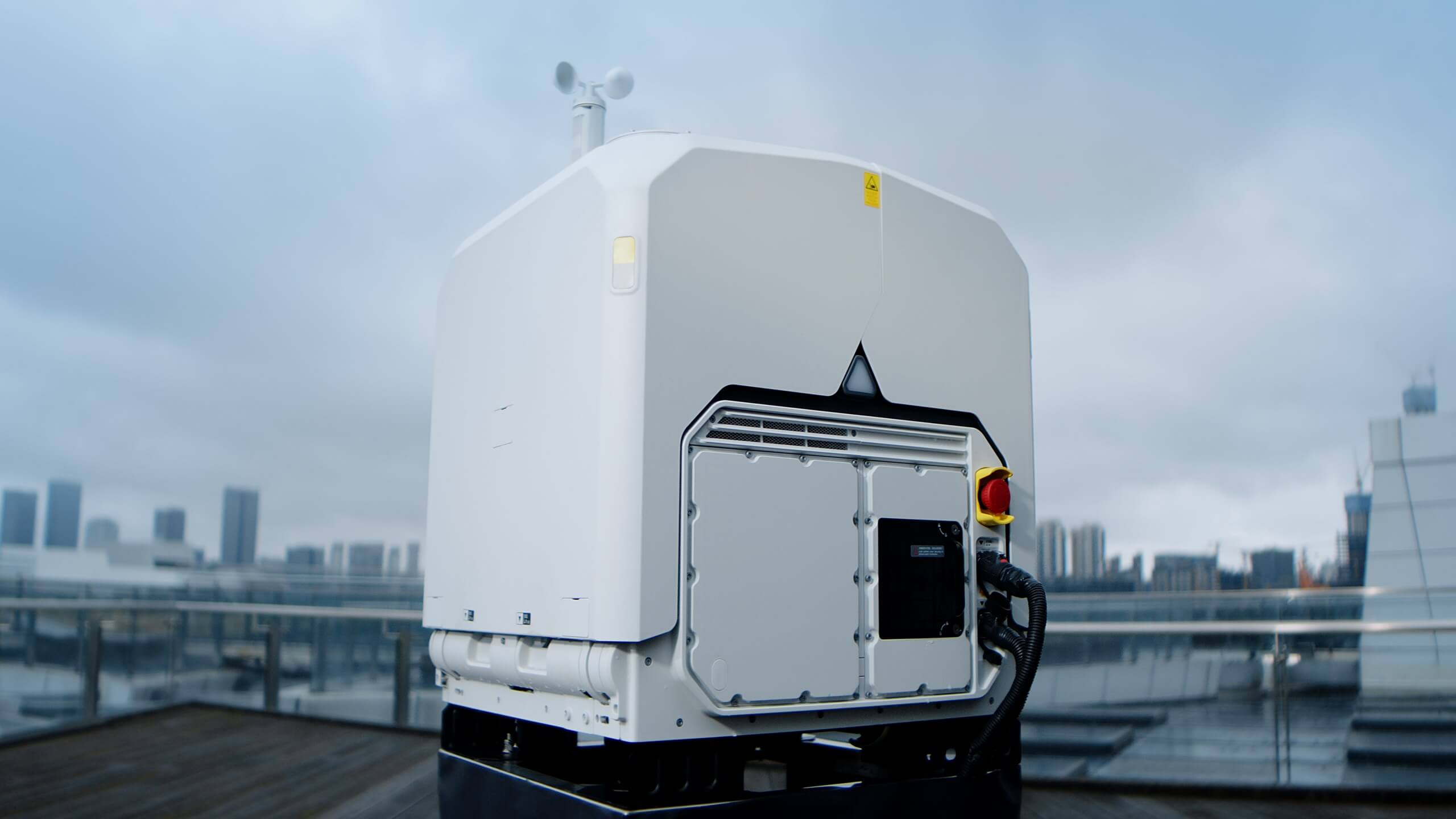
DJI has launched Dock 4 with a new aircraft, the Matrice 5TD. Instead of waiting for the drone to recharge, Dock 4 swaps in a fresh battery in under 25 seconds, with a landing-to-takeoff turnaround of under 45 seconds under DJI’s controlled test conditions.
That doesn’t make Dock 3 obsolete. Dock 3 with the Matrice 4D and 4TD remains a lighter, more flexible platform, with the Matrice 4D offering a mechanical-shutter camera for mapping.
This launch comparison explains the product differences for oil and gas, mining, utilities, construction, public safety and security teams in Canada.
The short answer
Choose Dock 4 with the Matrice 5TD for rapid-response operations, high-frequency patrols, thermal monitoring and extreme-cold sites.
Choose Dock 3 with the Matrice 4D or 4TD for mapping, scheduled inspections, vehicle-mounted deployment, or a lighter installation with lower power requirements.
Dock 4 vs Dock 3: dock comparison
| Feature | DJI Dock 3 | DJI Dock 4 |
|---|---|---|
| Compatible aircraft | Matrice 4D, Matrice 4TD | Matrice 5TD |
| Battery method | Charges the drone in place | Battery swapping plus wireless charging |
| Turnaround between flights | About 27 minutes (15% to 95% charge) | Under 45 seconds, landing to takeoff |
| Battery swap time | Not applicable | Under 25 seconds |
| Battery storage | No spare-battery compartments | 4 compartments; up to 3 stored batteries |
| Parallel charging | 1 channel | 2 channels; 27 minutes per battery (15% to 95%) |
| Operating temperature | –30°C to 50°C | –40°C to 50°C |
| Weather rating | IP56 | IP56 |
| Climate control | Automatic heating and cooling | Compressor air conditioning |
| Max operating altitude | 4,500 m | 5,000 m |
| Max landing wind | 12 m/s | 12 m/s |
| Dock weight | 55 kg | 66 kg, excluding stored batteries and aircraft |
| Size, closed | 640 × 745 × 770 mm | 639 × 640 × 836 mm |
| Power | 100–240 V AC; 800 W max | 100–240 V AC; 2,000 W max |
| Network connection | Direct Ethernet or 4G | Through DJI O4 Ground Station (Ethernet or 4G) |
| Vehicle mounting | Supported | Not listed |
| Installation | Standard deployment | DJI-authorized service provider |
| Operating radius | 10 km | 10 km |
DJI measures battery swapping from full dock-cover closure to swap completion; turnaround runs from landing to the next takeoff. Charging figures refer to 15%–95% at 25°C. These are controlled-test figures, not guaranteed field timings.
Matrice 5TD vs Matrice 4D and 4TD
| Feature | Matrice 4D | Matrice 4TD | Matrice 5TD |
|---|---|---|---|
| Main role | Mapping and visual inspection | Thermal, night and security | Thermal, night, security and rapid response |
| Max flight time | 54 minutes | 54 minutes | 59 minutes |
| Max hover time | 47 minutes | 47 minutes | 55 minutes |
| Weather rating | IP55 | IP55 | IP55 |
| Operating temperature | –20°C to 50°C | –20°C to 50°C | –40°C to 50°C |
| Wide camera | 4/3-inch, 20 MP, mechanical shutter | 1/1.3-inch, 48 MP | 1/0.98-inch, 50 MP, f/1.8 |
| Medium tele camera | 70 mm, 48 MP | 70 mm, 48 MP | 70 mm, 50 MP |
| Tele camera | 168 mm, 48 MP | 168 mm, 48 MP | 252 mm, 50 MP; 176× hybrid zoom |
| Thermal resolution | None | 640 × 512; super-resolution 1280 × 1024 | Native 1280 × 1024; UHR 2560 × 2048 |
| Laser rangefinder | 1,800 m | 1,800 m | 3,000 m |
| NIR light | No | Yes | Yes |
| 4G | Optional dongle | Optional dongle | Dual built-in 4G modules |
| Built-in RTK | Yes | Yes | Yes |
| Speaker | AS1; 300 m | AS1; 300 m | AS2D; 400 m, 120.5 dB |
| Light | AL1; 100 m | AL1; 100 m | AL2D; 40 W spotlight and 18 W floodlight |
| Parachute | Third-party | Third-party | DJI AP1; top mount |
Maximum endurance, sensing distances and accessory ranges depend on DJI’s specified test conditions. Camera focal lengths are equivalent focal lengths.
What’s new with Dock 4
Battery swapping for back-to-back missions
Dock 4 stores up to three batteries across four compartments and charges two in parallel. When the Matrice 5TD lands, the dock swaps in a charged battery rather than recharging the aircraft in place. This supports repeat alarms and long patrol cycles with a much shorter gap between flights.
Built for colder sites
Dock 4 and the Matrice 5TD are rated from –40°C to 50°C, extending the lower operating-temperature rating by 10 degrees compared with Dock 3. This is relevant to northern mines, Prairie oil and gas sites and remote utility corridors.
Larger cameras and longer telephoto reach
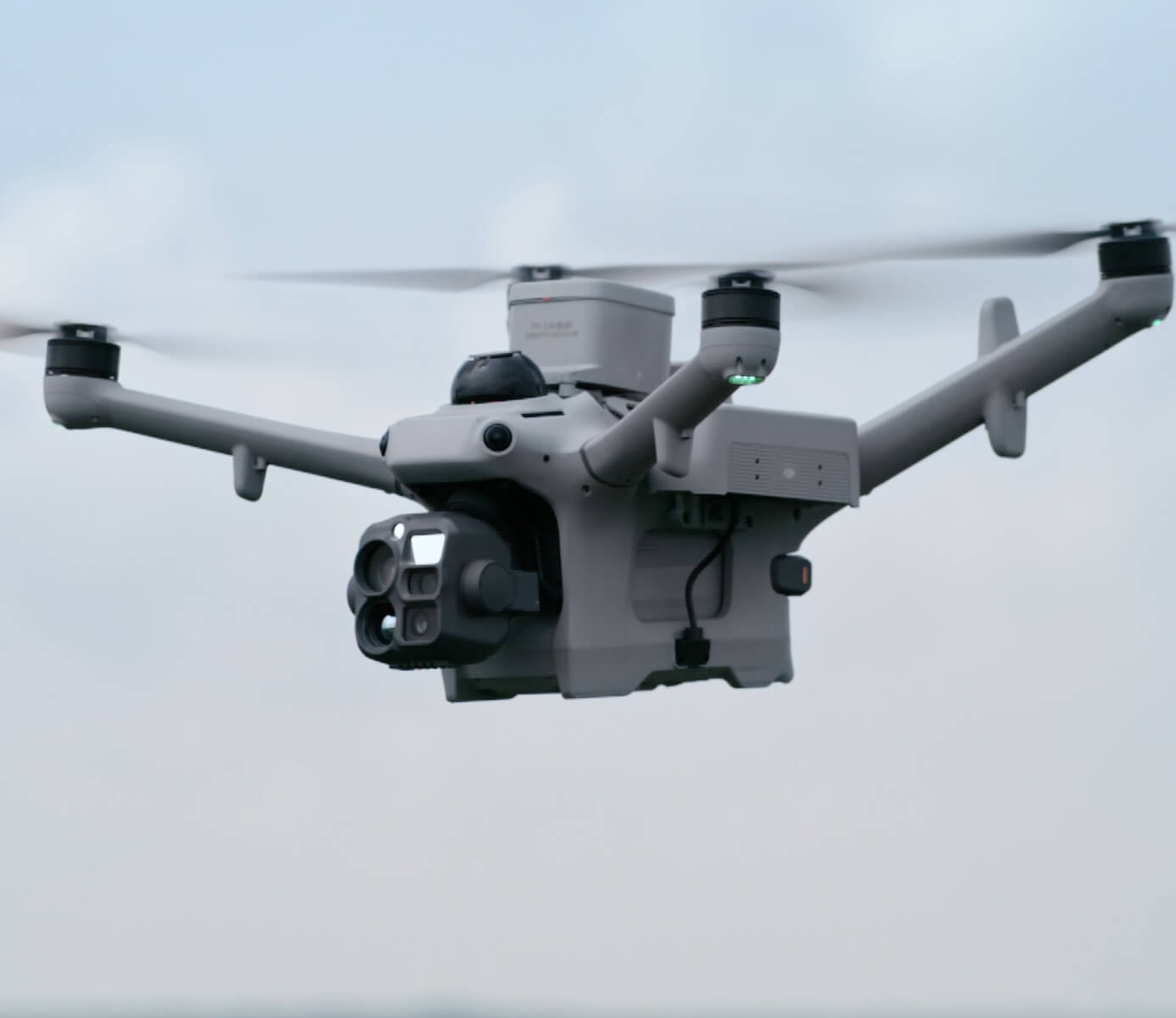
The Matrice 5TD adds a 1/0.98-inch, 50 MP wide camera with an f/1.8 aperture, a 252 mm tele camera with up to 176× hybrid zoom, Night Scene Mode and lens defogging on all three visible cameras.
A major thermal upgrade
Native thermal resolution increases from the Matrice 4TD’s 640 × 512 to 1280 × 1024. The Matrice 5TD also offers a 2560 × 2048 ultra-high-resolution mode, sensitivity of 50 mK or better under the specified test conditions, visible/thermal image fusion, spot and area temperature measurement, alerts and sun burn protection.
DJI O4 Ground Station and connectivity
Dock 4 connects through a separate DJI O4 Ground Station, rated IP67 and –40°C to 55°C. It adds RTK, roaming base-station support and connections for up to four ONVIF security cameras. The Matrice 5TD has dual built-in 4G modules.
DJI lists up to 40 km video transmission under Canada’s IC standard. Transmission range is not the operating radius: both docks list a 10 km operating radius. Actual link performance depends on conditions and local operating requirements.
Obstacle sensing and upgraded accessories
The Matrice 5TD combines vision, rotating LiDAR, millimetre-wave radar and downward 3D infrared sensing. Its accessories include the AS2D speaker, AL2D spotlight/floodlight and DJI AP1 top-mounted parachute.
AI, rapid response and multi-dock missions
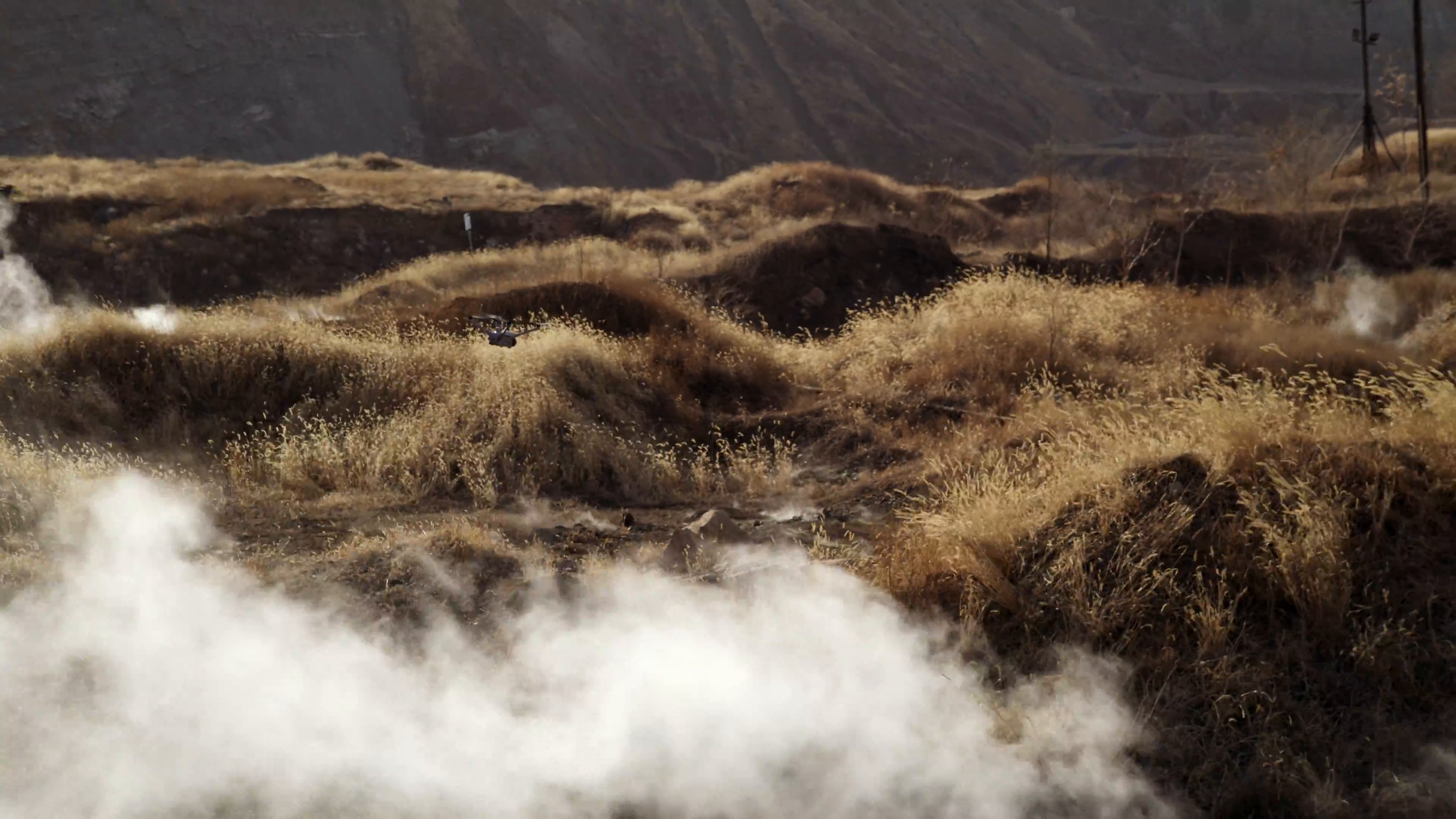
DJI says the Matrice 5TD’s AI detects 17 object types. It can fly to a scene at up to 21 m/s during FlyTo tasks, streaming live video, and take off from one Dock 4 and land at another up to 15 km away. That supports longer pipeline, transmission and road-corridor missions.
Where Dock 3 still wins
Mapping-focused aircraft
The Matrice 4D has a 4/3-inch, 20 MP mechanical-shutter camera for photogrammetry, stockpile volumetrics, construction progress, earthworks, orthomosaics and 3D models. Dock 4 currently lists only the thermal-focused Matrice 5TD.
Lighter installation and lower power
At 55 kg and an 800 W maximum power draw, Dock 3 is lighter and uses less power than Dock 4 at 66 kg and up to 2,000 W. Dock 3 connects to the network directly, while Dock 4 needs a separate ground station. This matters at remote sites with limited power.
Vehicle mounting and aircraft choice
Dock 3 supports vehicle-mounted deployment for temporary sites, moving work fronts and mobile patrol units. Choose the Matrice 4D for mapping or the Matrice 4TD for thermal inspection and patrols. Dock 3 has been in the field since 2025, with established workflows and support.
Which dock fits your industry?
| Industry or use case | Best fit | Why |
|---|---|---|
| Security and alarm response | Dock 4 | Rapid turnaround, better night imaging, upgraded speaker and AI detection |
| Public safety and drone as first responder | Dock 4 | Rapid launch and back-to-back missions |
| Oil and gas facility monitoring | Dock 4 | High-resolution thermal, repeat patrols and –40°C operation |
| Pipeline and power-line corridors | Dock 4 | Multi-dock missions and roaming ground stations |
| Substations and electrical inspection | Dock 4 | Native 1280 × 1024 thermal, 252 mm tele camera and cable detection |
| Mining stockpiles and pit mapping | Dock 3 + Matrice 4D | Mechanical-shutter mapping camera |
| Construction progress and volumetrics | Dock 3 + Matrice 4D | Photogrammetry and vehicle mounting |
| Mining thermal and conveyor inspection | Either | Dock 4 for higher-resolution thermal; Dock 3 + 4TD for lighter installations |
| Temporary or mobile sites | Dock 3 | Vehicle-mounted deployment |
| Sites with limited power | Dock 3 | 800 W maximum versus 2,000 W for Dock 4 |
| Northern and extreme-cold sites | Dock 4 | Rated to –40°C |
Many operations will use both: Dock 4 for high-frequency security and thermal monitoring, and Dock 3 with the Matrice 4D for mapping and volumetrics.
Frequently asked questions
What is the main difference between DJI Dock 4 and Dock 3?
Dock 4 swaps the drone’s battery in under 25 seconds and can relaunch in under 45 seconds under DJI’s controlled test conditions. Dock 3 recharges the drone in place, taking about 27 minutes from 15% to 95%.
Which drone works with Dock 4?
The DJI Matrice 5TD.
Can the Matrice 4D or 4TD use Dock 4?
No. DJI lists only the Matrice 5TD for Dock 4.
Is Dock 4 better in cold weather?
Dock 4 and the Matrice 5TD are rated down to –40°C. Dock 3 is rated down to –30°C, while the Matrice 4D and Matrice 4TD aircraft are rated from –20°C to 50°C.
Does Dock 4 replace Dock 3?
Not for every job. Dock 3 with the Matrice 4D remains the mapping-focused choice. Dock 3 is lighter, uses less power and supports vehicle mounting.
How much longer can the Matrice 5TD fly?
Up to 59 minutes of flight time and 55 minutes of hover time, compared with 54 and 47 minutes for the Matrice 4D and 4TD. Maximum endurance figures are measured under DJI’s test conditions.
Does Dock 4 need extra equipment?
Yes. Dock 4 connects to the network through the DJI O4 Ground Station, which also provides RTK and extended range.
How good is the Matrice 5TD’s thermal camera?
It has a native 1280 × 1024 thermal sensor, an ultra-high-resolution mode of 2560 × 2048 and sensitivity of 50 mK or better under DJI’s specified test conditions. That is double the native resolution of the Matrice 4TD.
Compare the products
Request a quoteShop the story
Related products in our catalog
Every product below is stocked and supported by Remote Robotic in Canada.
- DJI Dock 3
DJI Dock 3
Automated dock for Matrice 4D and Matrice 4TD remote inspection programs.
View product → - DJI Matrice 4D
DJI Matrice 4D
Dock-native M4D — IP55, ~54 min flight, pairs with Dock 3 for autonomous DFR & BVLOS.
View product → - DJI Matrice 4TD
DJI Matrice 4TD
Dock-native thermal M4TD with NIR aux light — night-ops DFR and thermal patrol.
View product →