Confined Space & Indoor Inspection
Inspect the inside of a tank without sending anyone into it
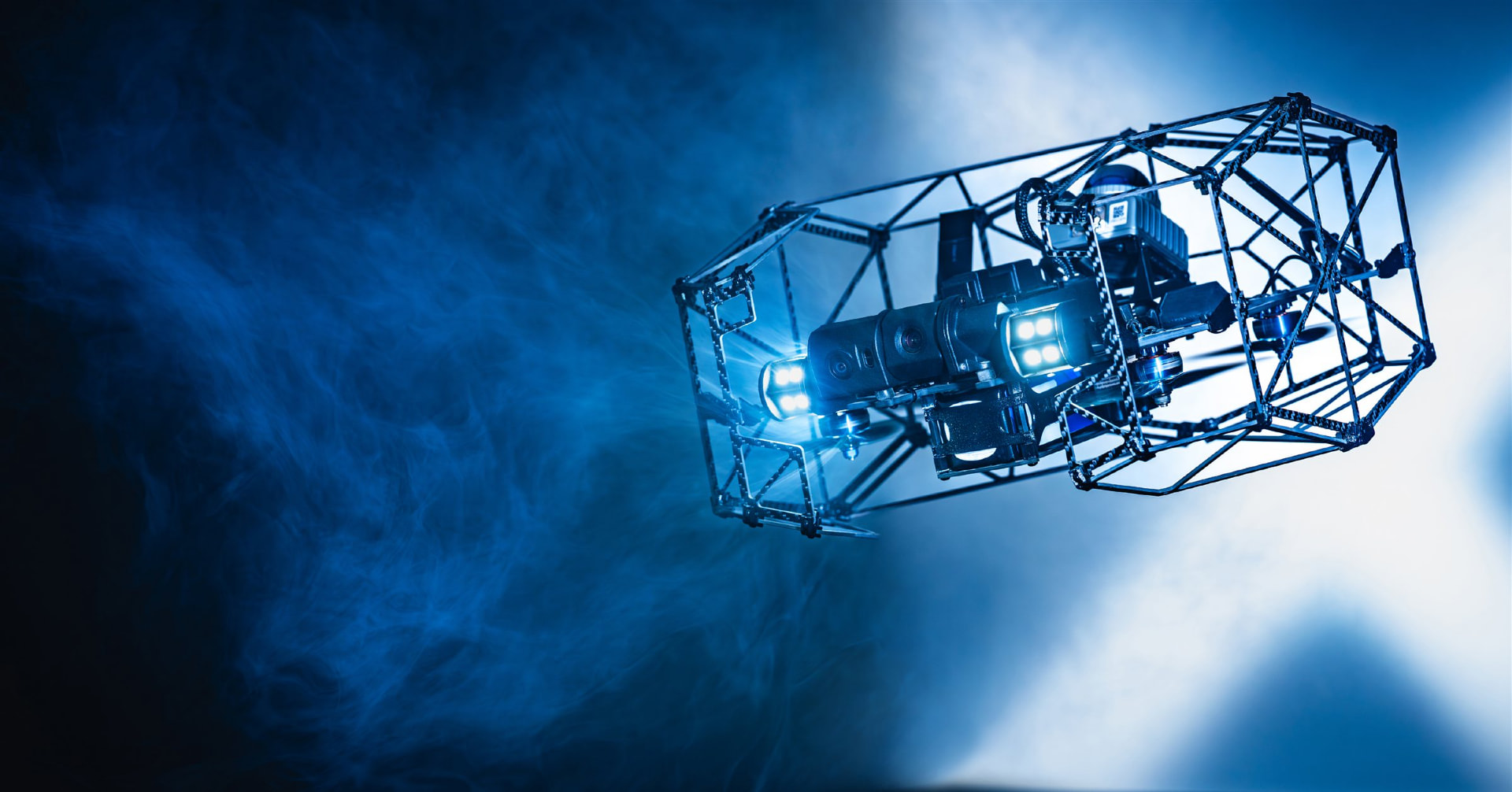
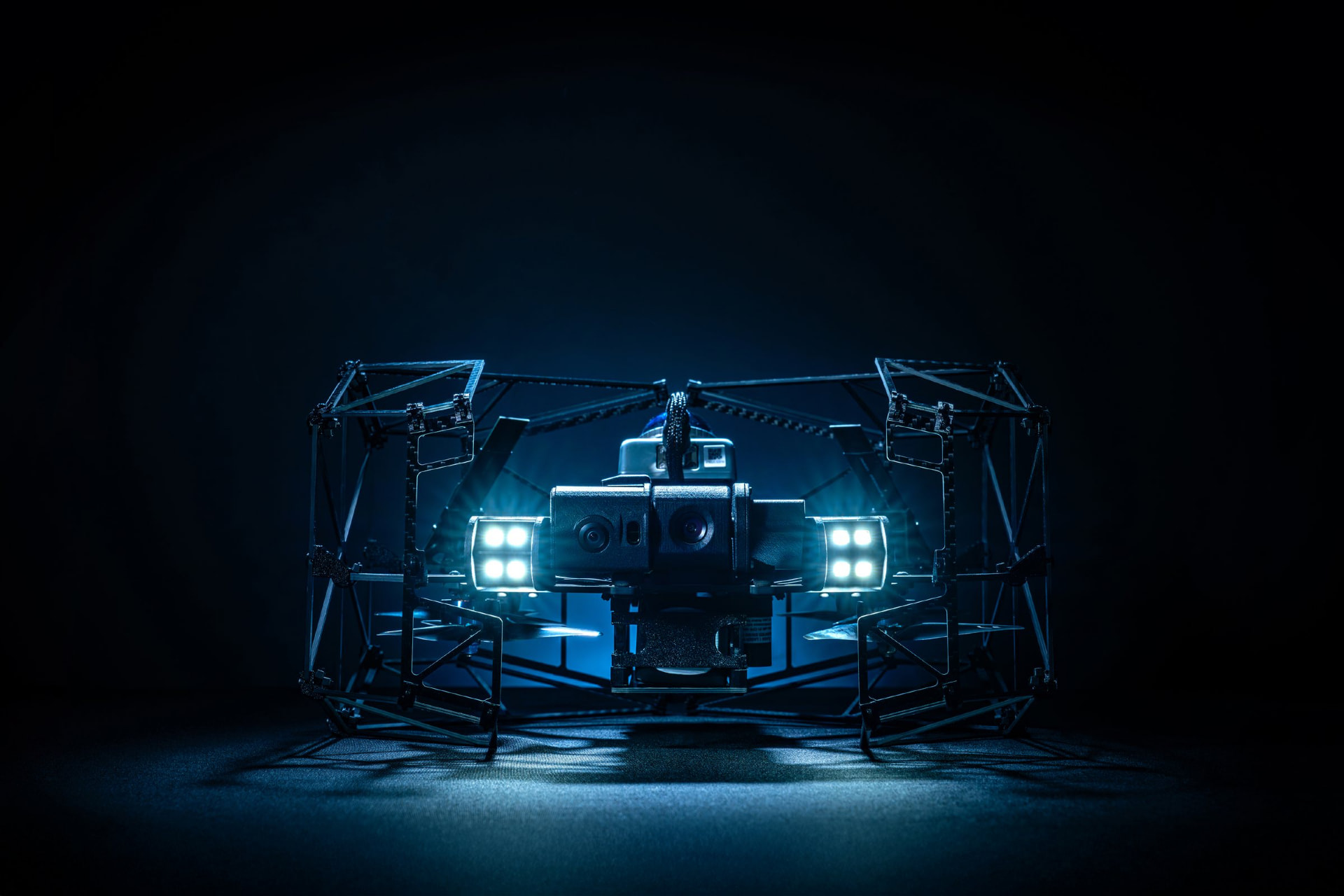
The Nolvis X1 is a caged, LiDAR-guided inspection drone built for enclosed industrial spaces where GPS does not reach. It flies through a standard manway, lights its own way, and brings back 4K video and a 3D model of the interior, while your crew stays outside.
- 100% Canadian-owned
- Five service locations across Canada
Why is confined space entry the most expensive way to look inside an asset?
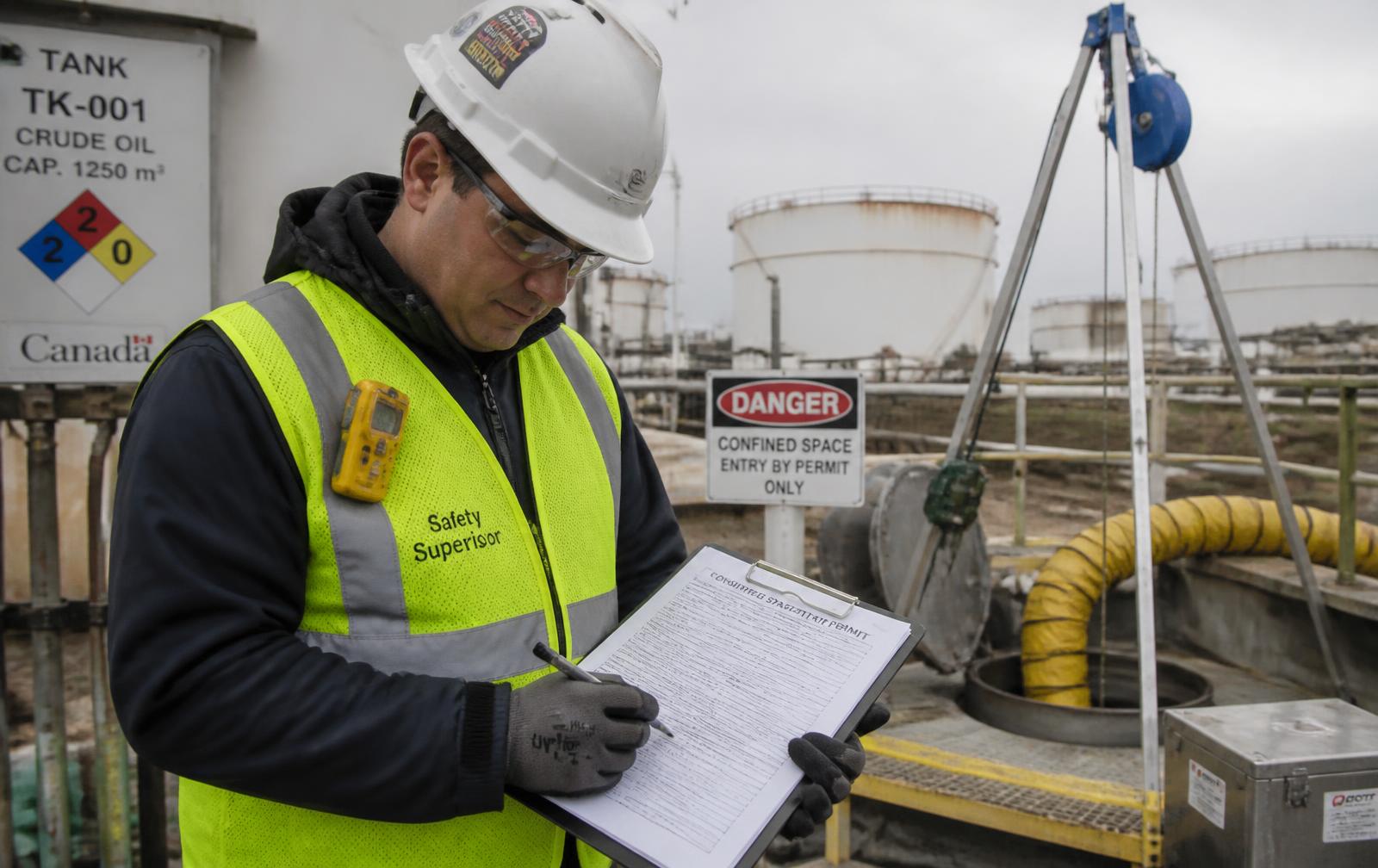
Entry costs more than the inspection it enables. Permits, atmospheric testing, an attendant, and a standby rescue plan are required before anyone goes in, and the scaffolding or rope access built to reach the surfaces is usually the largest line on the invoice.
The risk you can't fully control
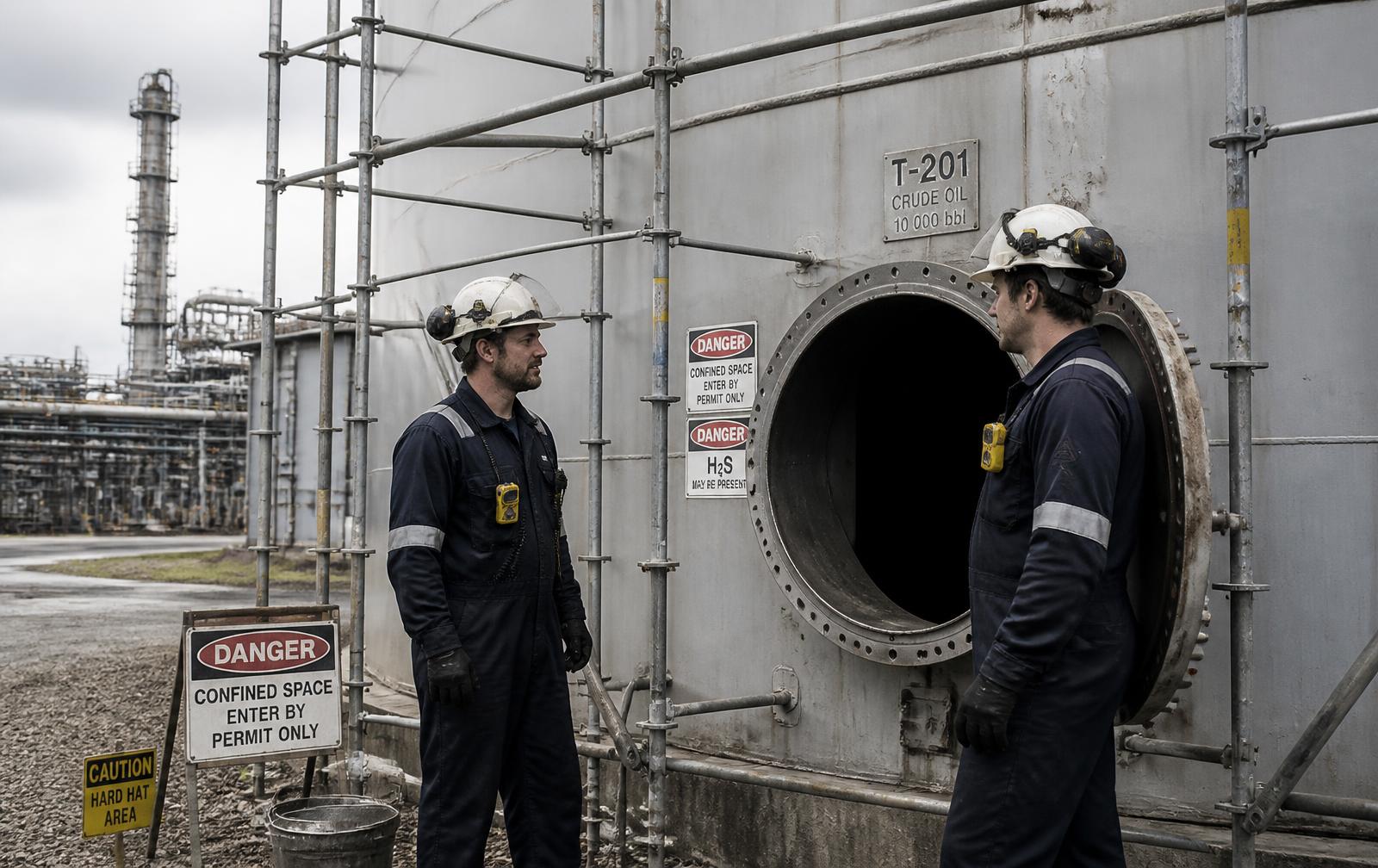
Enclosed spaces carry atmospheric, engulfment, and fall hazards. Every entry requires a permit, atmospheric testing, an attendant, and a rescue plan in place before anyone goes in.
The cost you can't avoid
Scaffolding, rope access, and the shutdown hours around them account for most of the cost of an internal inspection, not the inspection itself.
The record you can't compare
A visual walkthrough produces notes and photographs. It does not produce a measurable baseline you can set next year's inspection against.
Where does remote inspection fit under Canadian confined space regulation?
Canadian confined space regulation is built on the hierarchy of controls, which requires employers to consider eliminating a hazard before controlling it. A remote visual inspection that removes the need for entry is an elimination measure, the highest tier of that hierarchy, rather than a control layered on top of an entry that still happens.
There is no single national confined space regulation in Canada. Each jurisdiction sets its own requirements, and the definitions, permit procedures, and enforcement differ:
| Jurisdiction | Regulation |
|---|---|
| National standard | CSA Z1006:16 (R2020), Management of Work in Confined Spaces |
| Alberta | OHS Code, Part 5 — Confined Spaces |
| British Columbia | OHS Regulation Part 9 (B.C. Reg. 296/97), enforced by WorkSafeBC |
| Ontario | O. Reg. 632/05 — Confined Spaces |
| Federally regulated workplaces | Canada Occupational Health and Safety Regulations, Part XI |
What they share is a duty to assess the hazard and to demonstrate that elimination was considered. An inspection completed without entry is the clearest form of that demonstration, and it produces a documented record of the decision.
Remote inspection does not replace your confined space program. It reduces how often you have to execute it.
Hierarchy of controls
- EliminationInspect without entry
- Substitution
- Engineering controls
- Administrative controlsPermits, attendants
- PPEHarness, SCBA
Most effective at the top. Canadian OHS regulation requires higher tiers to be considered before lower ones.
Which Canadian industries use indoor inspection drones?
Any operator with large enclosed assets that have to be opened, entered, and documented on a schedule. In Canada that is concentrated in oil and gas, pulp and paper, power generation, mining, marine, and cement, where internal condition drives the turnaround plan.
How does a confined space drone inspection actually run?
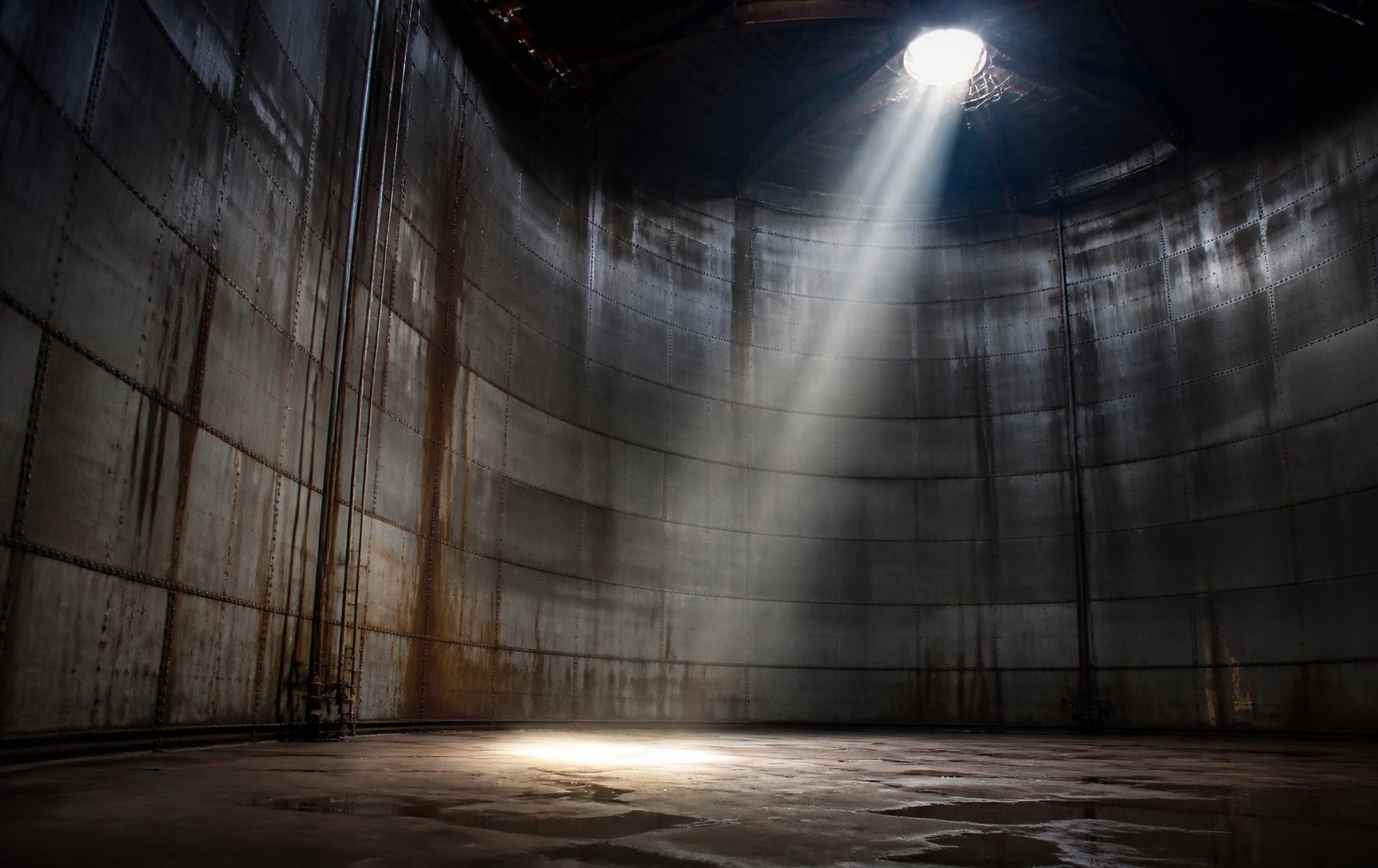
A crew sets up outside the manway, launches the aircraft into the space, and flies a planned path under its own lighting and LiDAR positioning. Video and point cloud data upload to one workspace, where findings are tagged and reported. Nobody enters the asset.
- 01
Deploy at the manway
The X1 sets up in minutes and launches from outside the space. No scaffolding, no rope access, no entry permit for the inspection itself.
- 02
Fly without GPS
LiDAR and visual sensors continuously estimate the aircraft's own position, so it holds steady inside steel structures where satellite positioning does not work. The protective cage keeps it flying after contact with a wall.
- 03
See in the dark
Onboard lighting rated to 10,480 lumens and a 1/1.7-inch 8 MP sensor capture corrosion, deposits, and deformation at 4K. The camera tilts through 180° to inspect above and below the flight path.
- 04
Leave with a record
Flight video and the 3D point cloud upload to one cloud workspace. Tag points of interest by priority, annotate findings, generate a report, and share it by private, public, or password-protected link.
Why buy three inspection drones instead of one?
Purpose-built confined space drones have historically cost enough that most inspection programs could justify only a single unit. At roughly a third of that price, an entire crew can be equipped: three vessels inspected in parallel during the same shutdown window, with a spare on the shelf instead of a stalled schedule.
Parallel inspections
Three teams, three assets, one turnaround window.
No single point of failure
A damaged aircraft mid-shutdown stops the schedule when you own one. It does not when you own two.
Lower training risk
Pilots build hours on a platform the program can afford to replace.
What are the Nolvis X1 specifications?
The X1 is a 1.8 kg caged aircraft measuring 360 × 310 × 210 mm, flying up to ten minutes per battery inside enclosed spaces. It carries a 1/1.7-inch 8 MP 4K camera, 10,480 lumens of lighting, and a Class 1 LiDAR that builds the point cloud used for condition monitoring.
Aircraft
| Dimensions | 360 × 310 × 210 mm (14.2 × 12.2 × 8.3 in) |
|---|---|
| Weight | 1.8 kg including battery |
| Max hovering time | 10 min |
| Max flight speed | 2.5 m/s |
| Max wind resistance | 3 m/s |
| Operating temperature | 0 °C to 45 °C |
| Operating frequency | 2.4 GHz ISM |
| Ingress protection | Dust-protected |
Camera & lighting
| Sensor | 1/1.7-inch, 8 MP |
|---|---|
| Video resolution | 4K (3840 × 2160) @ 25 fps |
| Gimbal | 180° tilt range |
| Lighting output | 10,480 lumens max |
LiDAR
| Laser safety | Class 1 |
|---|---|
| Range | 40 m @ 10% reflectivity / 70 m @ 80% reflectivity |
| Range accuracy | 2 cm @ 10 m |
| Point rate | 200,000 points/s |
| Frame rate | 10 Hz |
| Point cloud model accuracy | Approx. 10 cm |
Specifications are as published by Nolvis, Inc. and are subject to change. The X1 is designed for indoor operation. It is not certified for hazardous (classified) locations — your site's gas-free and hot-work permit procedures govern where and when it may be deployed. Battery operation is rated from 10 °C; contact us about cold-weather deployment planning. LiDAR range accuracy and point-cloud model accuracy are different measurements — the X1 is an inspection and condition-monitoring tool, not a survey-grade instrument.
What do you get back from an inspection flight?
Every flight returns 4K video and a LiDAR point cloud of the interior in one cloud workspace. Points of interest are tagged by priority, findings are annotated against the flight timeline, and the result is shared with engineering or a third-party inspector by link.
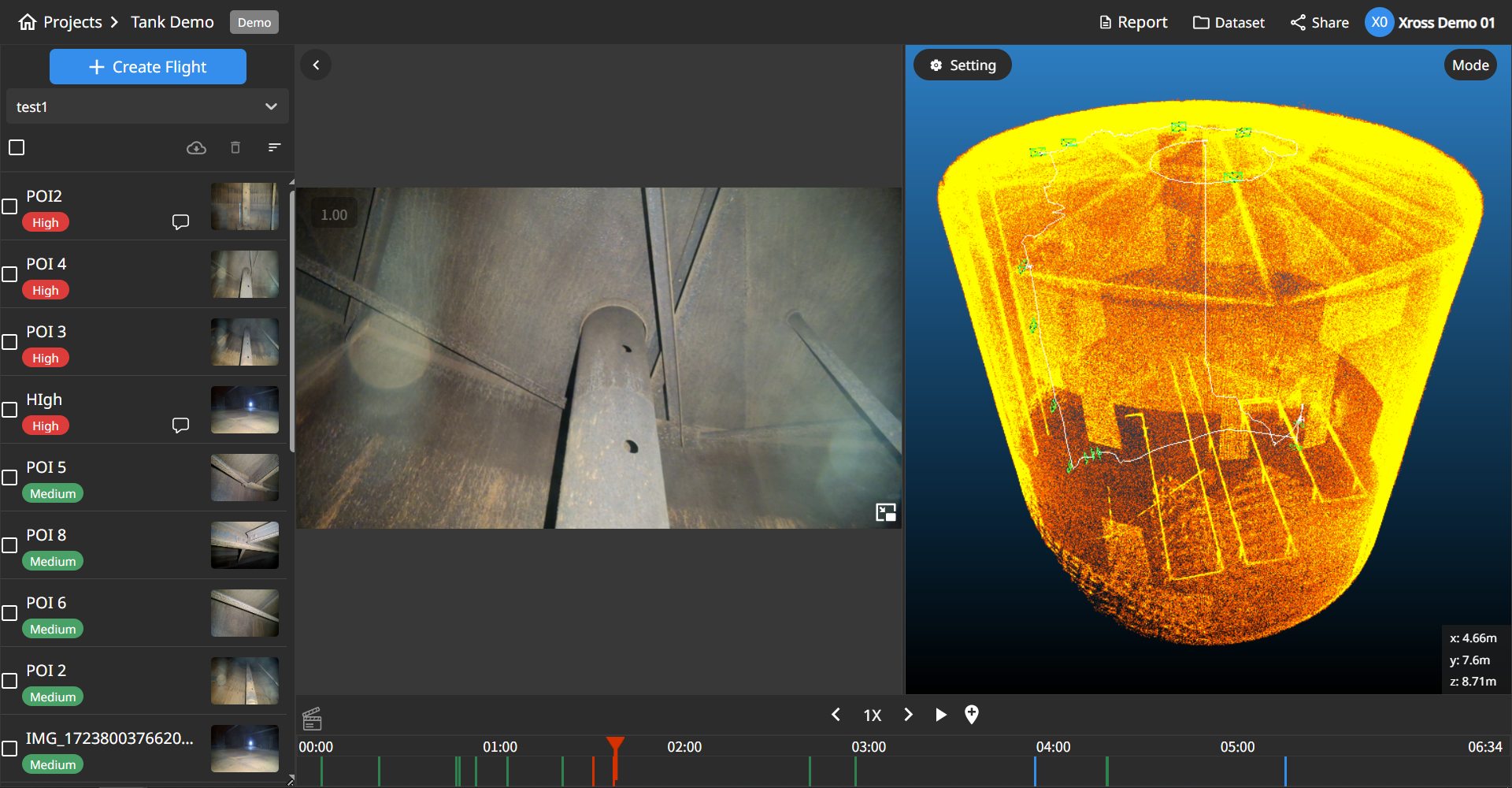
- Upload, view, and manage flight data in one cloud workspace
- Tag points of interest by priority — high, medium, low — and annotate findings
- Review camera footage and the 3D model side by side along a flight timeline
- Share results by private link, public link, or password-protected link, with view-only or editable access
Why buy an inspection drone from Remote Robotic Systems?
We are a Canadian-owned systems integrator with five offices, certified Transport Canada instructors on staff, and industrial specialists who run LiDAR and inspection programs for Canadian energy, mining, and utility operators. We operate the platforms we sell.
Canadian-owned, Canadian-supported
Five offices — Mississauga, Ottawa, Calgary, Burnaby, and Montréal — so a specialist is within reach of your site.
Training, not a handover
We deliver operator training and mission planning with the aircraft, so your crew is inspecting on its own after handover — not learning on the job.
Industrial specialists
We support LiDAR and inspection programs across Canadian energy, mining, and utilities.
We fly what we sell
Every platform we carry is one our own certified pilots operate.
What are the most common confined space inspection drone questions?
Buyers ask the same nine things: whether a drone can replace entry, how long it flies, how it holds position without GPS, what happens on contact with a wall, whether it is rated for classified areas, how it behaves in the cold, what it costs in Canada, and what data comes back.
How do you book a Nolvis X1 demonstration?
Tell us what you need to inspect and we will come back with landed Canadian pricing and a demo slot. Include your province, industry, and the assets you inspect in the message so a specialist can prepare. A specialist from the office closest to your site replies within one business day.
What to include in your message
- Province or territory and site location
- Industry and the assets you inspect internally (tanks, boilers, silos, penstocks, holds)
- Roughly how many internal inspections you run per year
- Whether you need a demo, Canadian pricing, training, or all three
What happens next
- A Canadian platform specialist replies within 1 business day.
- Volume, government, and education pricing available.
- Prefer to talk now? Call 416 303 3575
Prefer to talk first? 416 303 3575
Where can you read more before deciding?
Start with our LiDAR and inspection library for how point clouds are captured and used on Canadian sites, or describe the job to the Mission AI Advisor and get a shortlist from the platforms we carry.