
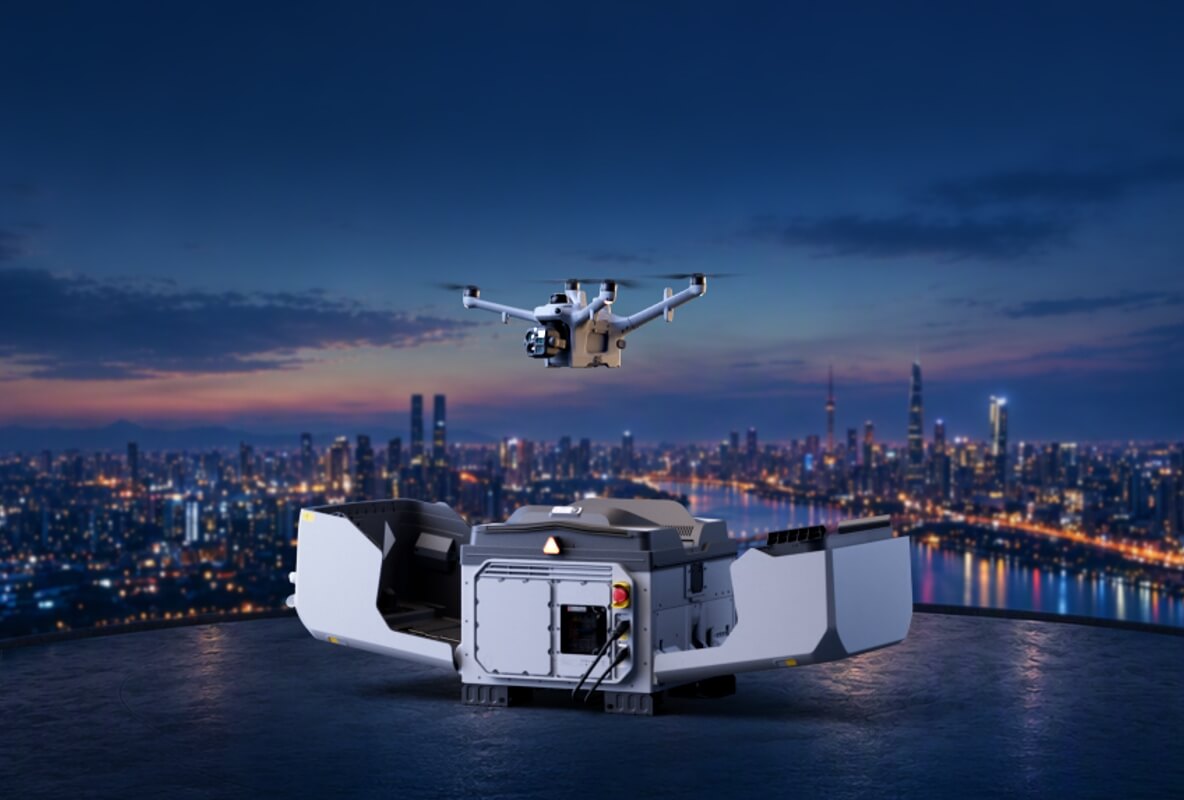
ROC – Remote Operation Center
Remote Site Security with the ROC: 24/7 Aerial Protection for Industrial Sites
Automated drones patrol on schedule, launch when an alarm goes off, detect people and vehicles with AI and stream live video, with licensed pilots overseeing every mission 24/7/365.
Remote Robotic · October 27, 2026 · 8 min read
Remote industrial sites are hard to protect. Well pads, mine sites, substations, solar farms, construction sites and laydown yards are often large, unfenced or lightly fenced, unstaffed at night, and hours from the nearest security team. Theft, vandalism, trespassing and unauthorized access cost operators money, put people at risk and can lead to environmental incidents and outages.
Traditional options all have gaps. Fixed cameras have blind spots and can’t follow an intruder. Guards are expensive, can’t cover large sites well, and face real risks working alone at night. Sending staff to check every alarm is slow and puts them in uncertain situations.
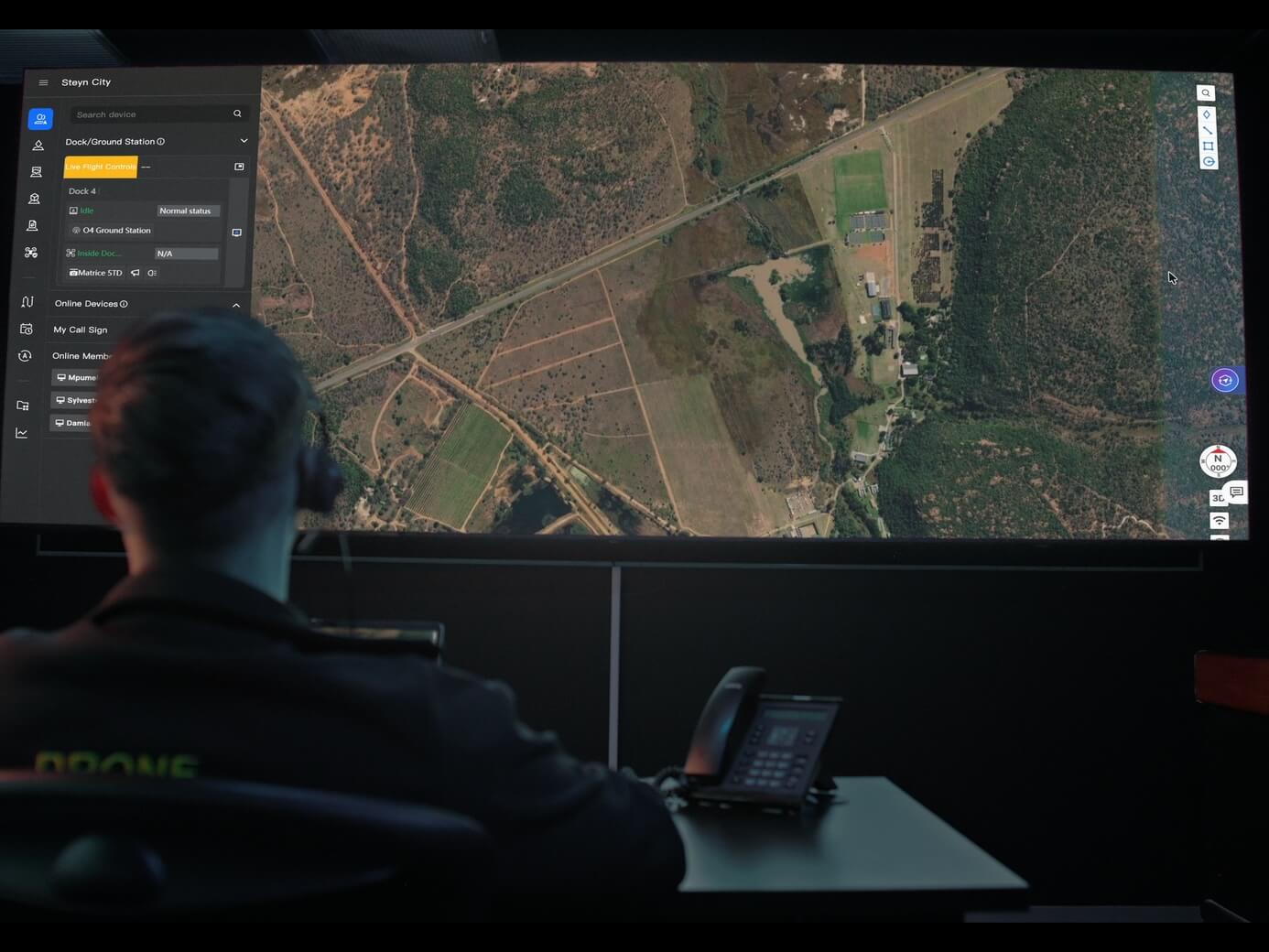
Remote Robotic’s Remote Operations Center (ROC) adds a new layer of protection. Automated drones based on your site patrol on schedule, launch automatically when an alarm goes off, detect people and vehicles with AI, and stream live video to your team. Licensed pilots oversee every mission remotely, 24/7/365.
Eyes on your site in minutes, with no one sent into the unknown.
The security challenges industrial sites face
Theft
copper, fuel, tools, equipment, batteries and materials
Vandalism
damage to equipment, fences, panels and infrastructure
Trespassing
unauthorized people on hazardous sites
Unauthorized vehicles
on lease roads, rights-of-way and access routes
Third-party interference
unapproved digging or work near buried assets
Large, remote sites
too big and too far away for guards to cover well
Night-time risk
most incidents happen after hours
Slow response
hours before anyone can check an alarm in person
Lone worker risk
staff sent alone to check alarms at night
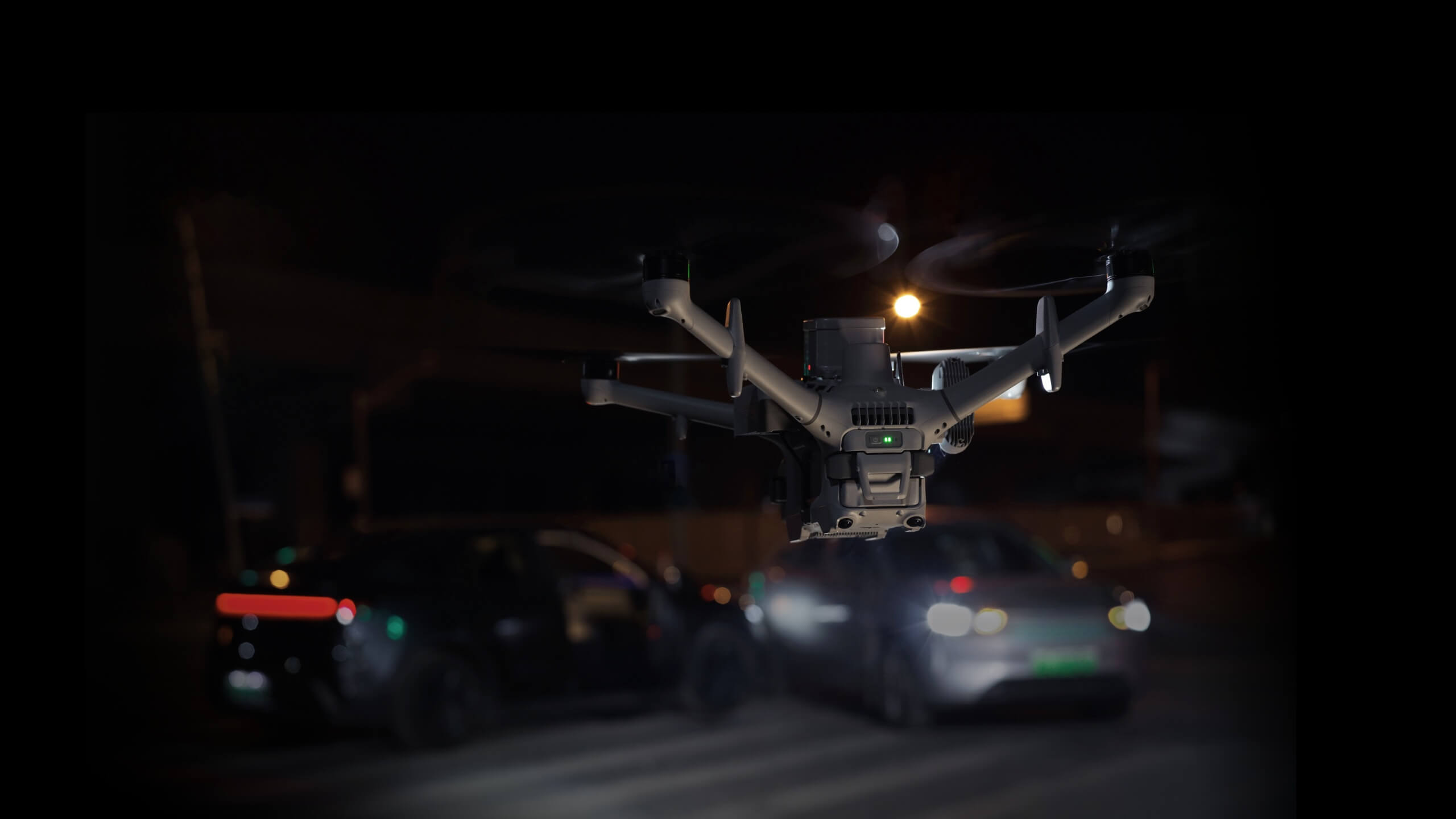
How the ROC protects your site
Scheduled patrols
Automated patrols run on a set schedule, hourly, nightly or at shift changes. The drone flies the same route every time, covering fence lines, gates, laydown yards, equipment areas and access roads.
Alarm-triggered response
When a fence sensor, camera, access control system or SCADA alarm goes off, the drone launches automatically and flies to the location, streaming live video to your team and the ROC.
AI detection
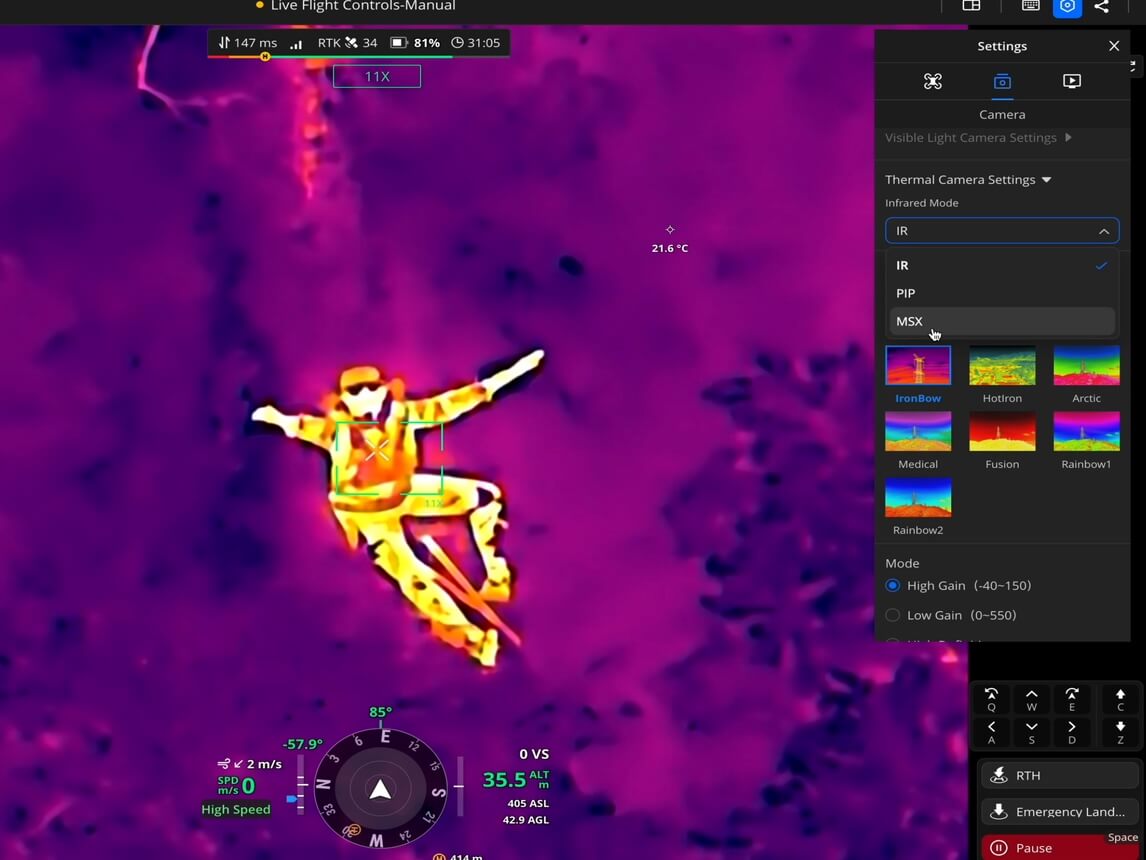
Onboard AI recognizes people, vehicles and boats in visible imagery, and people, vehicles, vessels and moving objects in thermal imagery. Detection can be limited to specific zones, such as a fence line, a fuel storage area or a pipeline corridor, and each target type has its own alert threshold.
Automatic actions on detection
When the AI detects activity, the drone can automatically:
- 01Take photos of each detected person or vehicle
- 02Record video
- 03Hover and wait for a pilot to take over
- 04Broadcast a warning through the onboard speaker
- 05Turn on the spotlight to light up the scene
- 06Send an alert with a snapshot and location to your team
Tracking
With Smart Track, ROC pilots can lock onto a detected person or vehicle and follow it automatically. If the target is lost, the system tries to re-acquire it.
Night coverage
Thermal imaging detects people and vehicles in complete darkness, and Night Scene Mode provides low-light colour imaging.
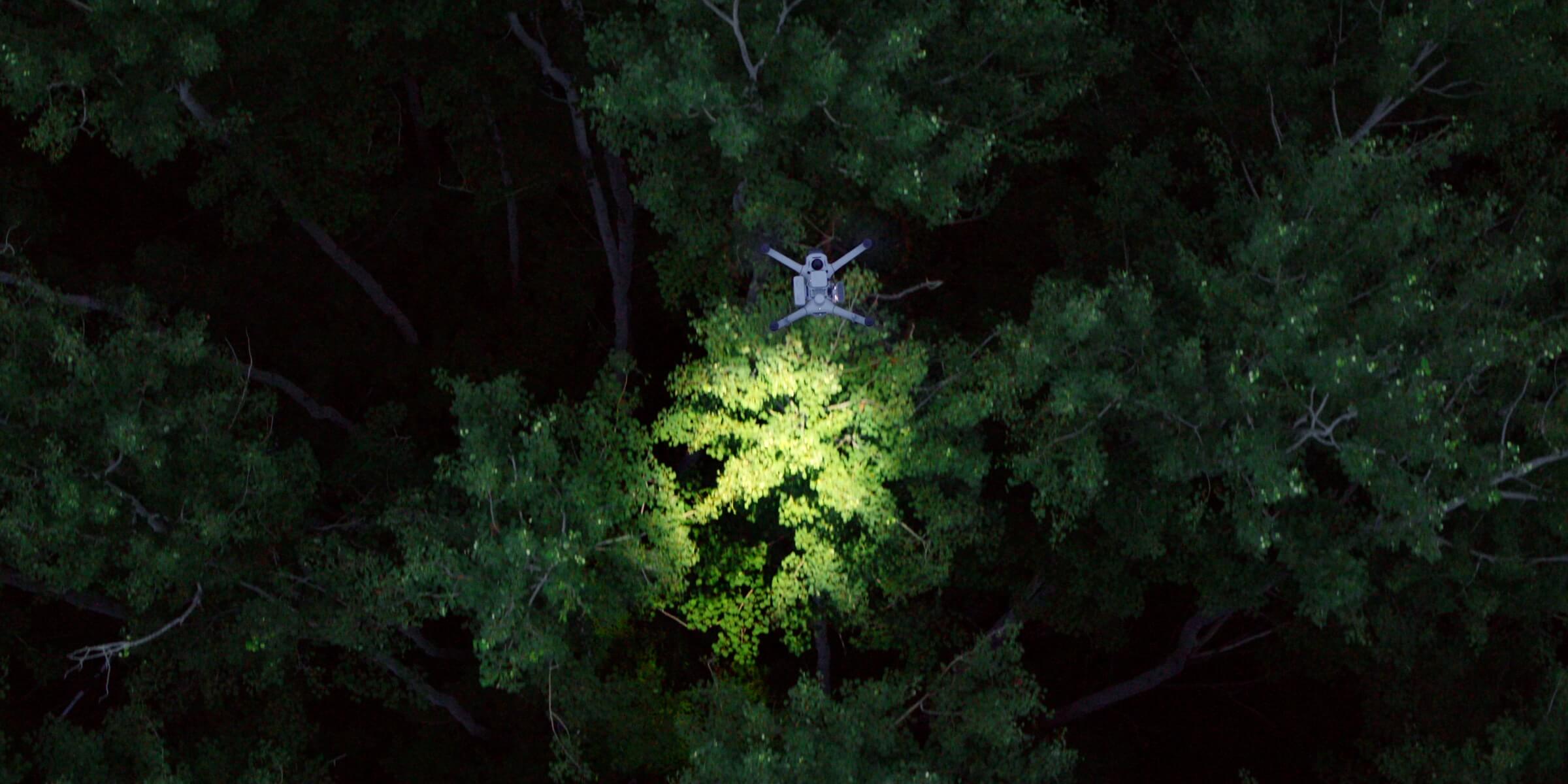
Deterrence
| Speaker | broadcasts warnings at 120.5 dB, with a range of up to 400 m |
|---|---|
| Spotlight | a 40 W spotlight and an 18 W floodlight light up intruders and the scene |
Platform: DJI Dock 4 with the DJI Matrice 5TD, also available on DJI Dock 3.
Security by industry
01
Oil and Gas
- Well pads and batteries: night patrols and alarm response at unstaffed sites
- Fuel and condensate theft: detect people and vehicles near tanks and loading areas
- Equipment and copper theft: protect pumps, compressors, cables and tools
- Pipeline rights-of-way: detect unauthorized vehicles and equipment on corridors
- Lease roads and access points: monitor gates and entry routes
- Incident response: live aerial video during fires, releases or suspicious activity
02
Mining and Surveying
- Perimeter patrols: large mine boundaries that are hard to fence and patrol
- Restricted and hazard zones: detect people near pit edges, blast areas, stockpiles and tailings facilities
- Equipment and fuel security: protect haul trucks, excavators, fuel farms and parts stores after hours
- Explosives storage: extra coverage around magazines and restricted areas
- Remote and idle sites: monitor sites during shutdowns and seasonal closures
03
Energy and Utilities
- Substations: detect intruders inside fences and around control buildings
- Copper theft: protect grounding, cables and conductors at substations and yards
- Solar farms: patrol large arrays for theft and vandalism
- Wind farms: monitor remote turbine sites and access roads
- Hydro facilities: watch dams, reservoirs and intake areas, with boat detection on the water
- Transmission corridors: detect vehicles and equipment working near lines
04
Construction
- After-hours patrols: protect sites once crews leave
- Equipment theft: monitor excavators, loaders, generators and tools
- Material theft: watch laydown yards, copper, lumber and steel
- Trespassing: detect people on active sites, a major safety and liability risk
- Multi-site coverage: patrol several projects from one operations centre
05
Public Safety and Municipal Facilities
- Municipal yards and facilities: water treatment plants, public works yards and depots
- Critical infrastructure: reservoirs, pump stations and utility sites
- Event and incident support: aerial overwatch during emergencies
Drones vs traditional security
| Fixed cameras | Guards | ROC drones | |
|---|---|---|---|
| Coverage | Fixed views, blind spots | Limited by patrol routes and time | Whole site from above |
| Following an intruder | No | On foot, with risk | Smart Track from the air |
| Night coverage | Depends on lighting | Limited visibility | Thermal imaging |
| Response to an alarm | Records only | Minutes to hours | Launches automatically |
| Worker risk | None | Lone-worker risk | No one sent in |
| Deterrence | Passive | Physical presence | Speaker and spotlight |
| Large or remote sites | Many cameras needed | Many guards needed | Scales across sites |
| Records | Video footage | Patrol logs | Geotagged images, video and alert records |
The ROC works alongside your cameras, alarms and security team. Docks can also connect up to four existing network cameras, so you can see the site from the ground and the air in one place.
How an alarm response works
- 01
An alarm is triggered by a fence sensor, camera, access control or SCADA system.
- 02
The drone launches automatically from its base on site.
- 03
It flies to the alarm location, streaming live visual and thermal video.
- 04
AI detects people and vehicles, and the ROC pilot confirms what’s happening.
- 05
The drone responds: it tracks the target, broadcasts a warning and lights up the scene.
- 06
Your team is alerted with snapshots, locations and live video.
- 07
You decide the next step, whether that’s sending staff, contacting police or standing down a false alarm.
- 08
Everything is recorded for incident reports, insurance and investigations.
Fewer false alarms, faster decisions
Many alarms are caused by wildlife, weather or equipment faults. Without eyes on site, every alarm means sending someone to check.
With the ROC, the drone is often overhead quickly, and pilots can confirm whether there’s a real threat. Your team only goes out when it’s needed, and knows what they’re walking into.
Built for Canadian sites
- Cold weather: operates down to –40°C
- Weather sensors: flights hold automatically when conditions aren’t safe
- Night coverage: thermal and low-light imaging for long winter nights
- Quick turnaround: fast battery swapping supports back-to-back patrols and repeat alarms
- Licensed Canadian pilots: oversee every mission
Evidence and records
- Geotagged photos and video of every detection
- AI warning records with snapshots, filterable by date and object type
- Flight logs for every patrol and response
- Exportable reports for incident reports, insurance claims and police
What’s included
- Equipment: drones and bases, supplied, installed and maintained by us
- Licensed pilots: remote oversight 24/7/365
- Patrol design: routes, schedules and detection zones built around your site
- Alarm integration: response flights triggered by your existing systems
- Alerts and live video: delivered to your team in real time
- Records: detections, video and flight logs for every mission
One predictable monthly fee. No fleet to own. No drone training on site.
Frequently asked questions
Can the drone launch automatically when an alarm goes off?
Yes. Missions can be triggered by fence sensors, cameras, access control or SCADA alarms.
What can the AI detect?
People, vehicles and boats in visible imagery, and people, vehicles, vessels and moving objects in thermal imagery.
Does it work at night?
Yes. Thermal imaging detects people and vehicles in complete darkness.
Can the drone deter intruders?
Yes. It can broadcast warnings through a speaker with a range of up to 400 m and light up the scene with a spotlight.
Does it replace our cameras or security staff?
No. It works alongside your existing systems, adding aerial coverage, faster response and fewer unnecessary call-outs.
Can it cover multiple sites?
Yes. One operations centre can monitor many sites under one program.
Do we need anyone on site?
No. You only need power and a network connection at the drone’s base on site.
Get started
Protect your sites around the clock, respond faster and keep your people out of harm’s way. Book a ROC briefing and we’ll design a security program around your sites, your risks and your existing systems.
Request a briefing with the ROC form below or call 416-303-3575.
ROC program
Talk to the ROC team
Shop the story
Related products in our catalog
Every product below is stocked and supported by Remote Robotic in Canada.
- DJI Dock 4
DJI Dock 4
DJI's first battery-swapping dock — ~25-second swaps for 24/7 operations, −40°C to 50°C, IP56. Pairs with the Matrice 5TD.
View product → - DJI Matrice 5TD
DJI Matrice 5TD
Dock 4 aircraft with wide + 1280×1024 thermal cameras, mmWave radar and LiDAR — 59 min flight, 3,000 m laser rangefinder.
View product → - DJI Dock 3
DJI Dock 3
Automated dock for Matrice 4D and Matrice 4TD remote inspection programs.
View product →