
Public Safety
Detection Isn't Enough — Inside the Counter-UAS Response
The panel's clearest theme: seeing a drone is not the same as having a plan for it.
Remote Robotic · October 27, 2026 · 3 min read
Watch the public safety panel
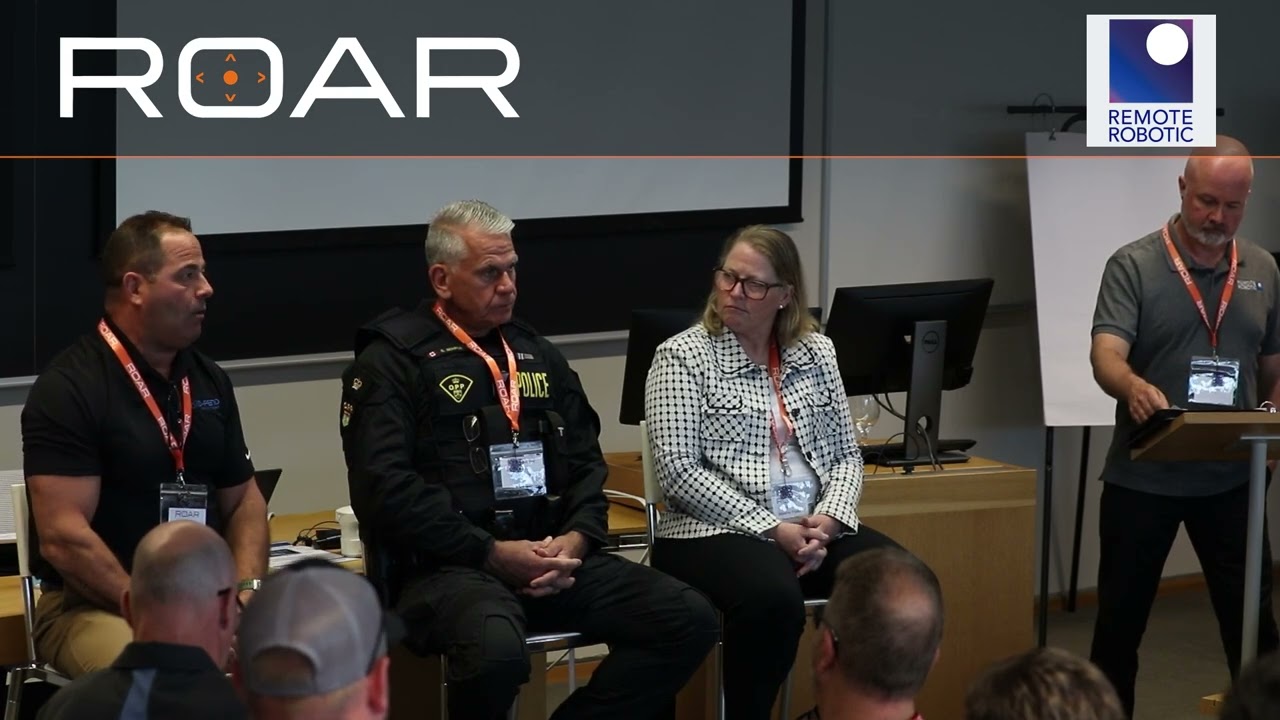
Watch on YouTube ↗The panel's clearest theme: seeing a drone is not the same as having a plan for it. Agencies largely lack situational awareness in the airspace above them, and without it, there's no basis for an informed decision — a problem one panelist described from direct experience advising special operations units on exactly this gap.
That gap matters because the old playbook doesn't transfer. As the panel put it bluntly: detection alone is no longer the solution. Knowing a drone is overhead doesn't tell you what to do with it — and the panel argued that's the piece of the problem that needs to progress fastest.
Mitigation raises its own hard questions. Bring a drone down and you've got a three-to-ten-pound object falling out of the sky, with no certainty where it lands or who picks it up first — and whoever does becomes the evidence chain for what comes next. Against a genuinely malicious operator, the problem compounds: disabling one drone doesn't disable the operator, who can simply launch another twenty minutes later.
The more advanced systems don't just detect — they extract. Depending on the system, counter-UAS technology can pull telemetry and controller-location data off a drone in real time, while it's still being tracked, giving officers an actual, actionable plan to intercept the person flying it rather than just the aircraft.
By the end of the session, the panel's moderator asked the question directly: how does counter-UAS actually work, start to finish? The answer, from the panel's counter-UAS specialist: detect, track, identify, mitigate. Detection typically starts with library-based RF/SDR (software-defined radio) systems that reverse-engineer commercial drones' telemetry and protocols — which is also their limit, since a drone outside the library, or one running over cellular instead of RF, won't show up. That gap is closed by layering in radar and micro-Doppler tracking, which can flag an unknown object as a drone by how it moves, even with no RF signature at all. Mitigation, the panel was careful to note, isn't simply "jam it and move on": jamming a scene isn't practical, every mitigation option has to fit within provincial and federal licensing, and officers still carry the responsibility of knowing exactly what they're bringing down and where it's likely to land.