
Public Safety
The Real Drone Threat to Public Safety — Separating Hobbyists From Criminals
The rapid proliferation of drones has brought real benefits to law enforcement and public safety, but it's also opened up threats most agencies weren't built to handle.
Remote Robotic · October 27, 2026 · 3 min read
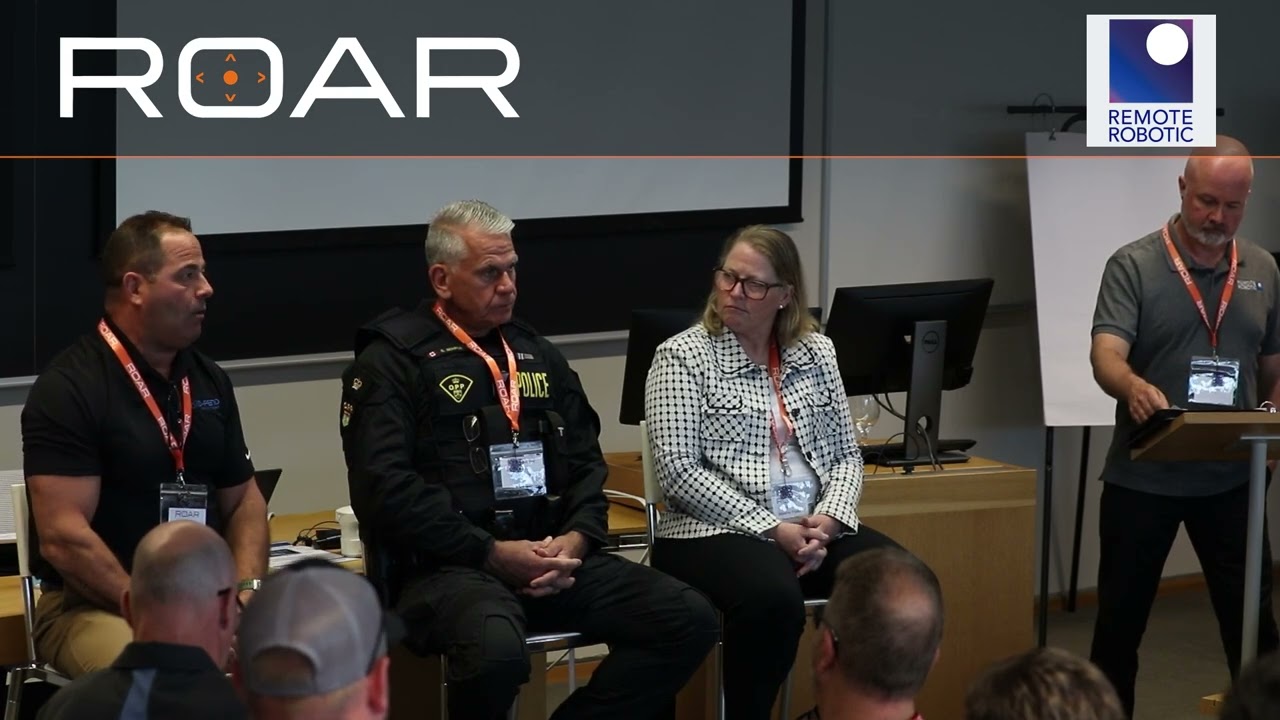
Watch the public safety panel
Watch on YouTube ↗The rapid proliferation of drones has brought real benefits to law enforcement and public safety, but it's also opened up threats most agencies weren't built to handle. As the panel's public safety team lead put it opening the session, organized crime is no longer just jamming law enforcement drones — it's spoofing GNSS and RF signals, meaning criminal actors are starting to catch on to police tactics faster than agencies are adapting to them.
The most immediate, overlooked case: correctional facilities. Drones are now a routine contraband-smuggling route into prisons, and the panel noted that corrections staff in the room would recognize the problem immediately — a facility in the Kingston area was specifically called out as having dealt with it directly.
But the panel was careful not to overstate the threat. Most of what agencies actually encounter are hobbyists — people interested in watching a police operation, not disrupting one — and the panel's read was that education, not enforcement, is the first lever: letting the public know that flying a drone over a containment call or a public order event isn't a good idea, before it ever becomes a legal problem.
That said, the criminal end of the spectrum is real and growing. The panel pointed to the trucker convoy protests as a concrete domestic example of drones being used for counter-surveillance on police — a case that moves well past "clueless or careless" into deliberate interference. And the scale question isn't hypothetical: one system, run for just 24 hours at a single headquarters, tracked 187 drones overhead. That's the visibility problem in one number — agencies can't assess a threat they can't see.
Regulation is coming, but it won't close the gap on its own. Transport Canada's remote ID requirement — no drone sold from 2028 onward without onboard remote ID — will address the majority of situational awareness for compliant operators. But the panel was blunt that criminals adapt as fast as the rules do: spoofing remote ID is possible, and the panel described real cases of home-built, cellular-modem-equipped drones flown from three provinces away, specifically to stay off the radar remote ID was built to provide.