
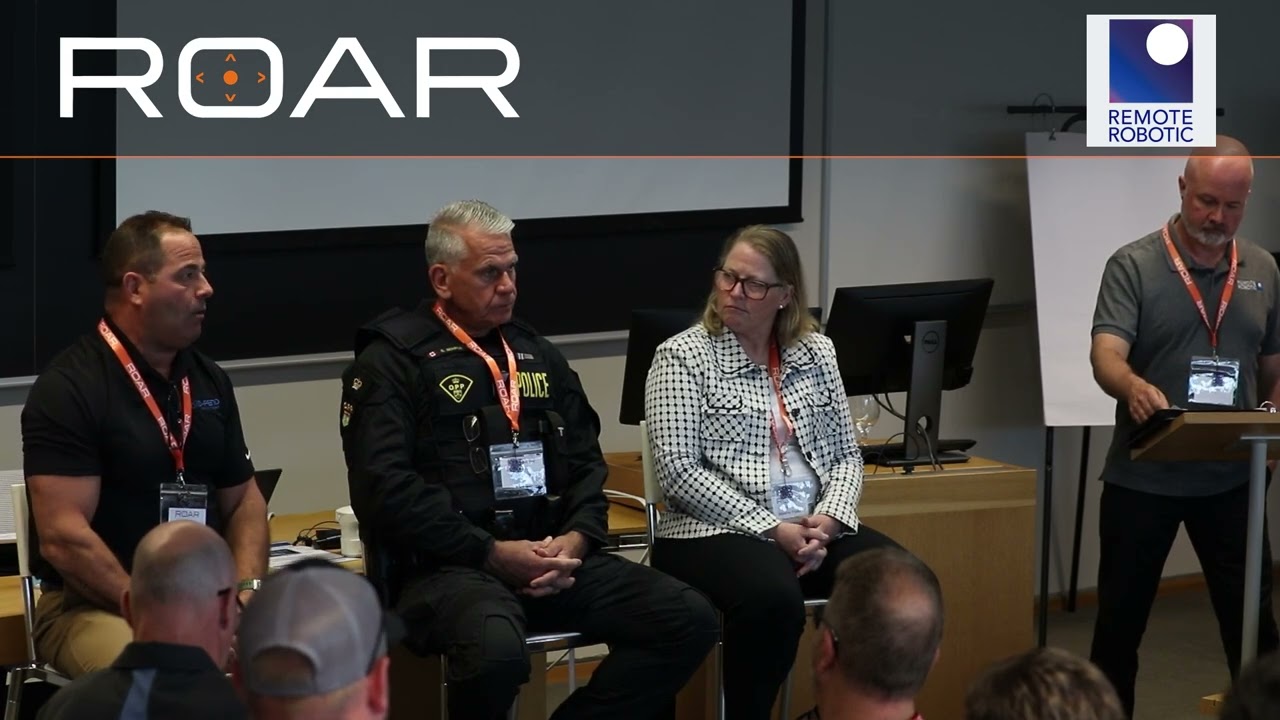
Public Safety
What It Actually Takes to Sell Counter-UAS Technology to Police
For anyone building in this space, the panel offered a direct look at how adoption actually happens — and it isn't the pitch deck most startups expect.
Remote Robotic · October 27, 2026 · 3 min read
Watch the public safety panel
Watch on YouTube ↗For anyone building in this space, the panel offered a direct look at how adoption actually happens — and it isn't the pitch deck most startups expect. The panel pointed to a concrete example: a startup in this space was acquired by Motorola for $1.6 billion. The reminder behind it — most companies that reach that scale started exactly where today's founders are, and the panel's encouragement to innovators in the room was genuine.
But enthusiasm for innovation doesn't mean police agencies will tolerate half-finished products. The panel was candid that officers don't have the time, or the mandate, to help a vendor develop a product on the job — if you want to sell into policing, what you bring has to be ready to go, proven, and able to survive being handed to a dozen officers to try and break.
That said, "ready" isn't one fixed bar. In digital forensics, the panel described a genuinely collaborative model: working directly with vendors to use AI to locate evidence faster in terabytes of seized data, giving product feedback in exchange for a proof-of-concept discount. The lesson for vendors: understand which part of an agency you're selling into, because the room for iteration varies a lot between a forensics lab and an aeronautics unit that needs something closer to plug-and-play from day one.
For vendors wondering how to even get in the room, the panel named real paths rather than vague advice. Associations like CACP and OACP (the Canadian and Ontario Associations of Chiefs of Police) run standing committees that evaluate emerging technology across municipal, provincial, and federal lenses — and having a single ally inside an agency who's seen your product work can be the opening that gets you in front of that structure. One audience suggestion, which the panel liked: a hackathon-style model, where an agency sets a real operational requirement and lets vendors compete to solve it — a faster, more direct filter than the standard sales cycle, and one the panel thought organizations like CACP could realistically stand up.