
Public Safety
From the Front Line — Training, Culture, and the Future of Drones in Policing
A question from the floor cut to the real gap: officers on scene often can't tell a toy drone from one worth worrying about.
Remote Robotic · October 27, 2026 · 3 min read
Watch the public safety panel
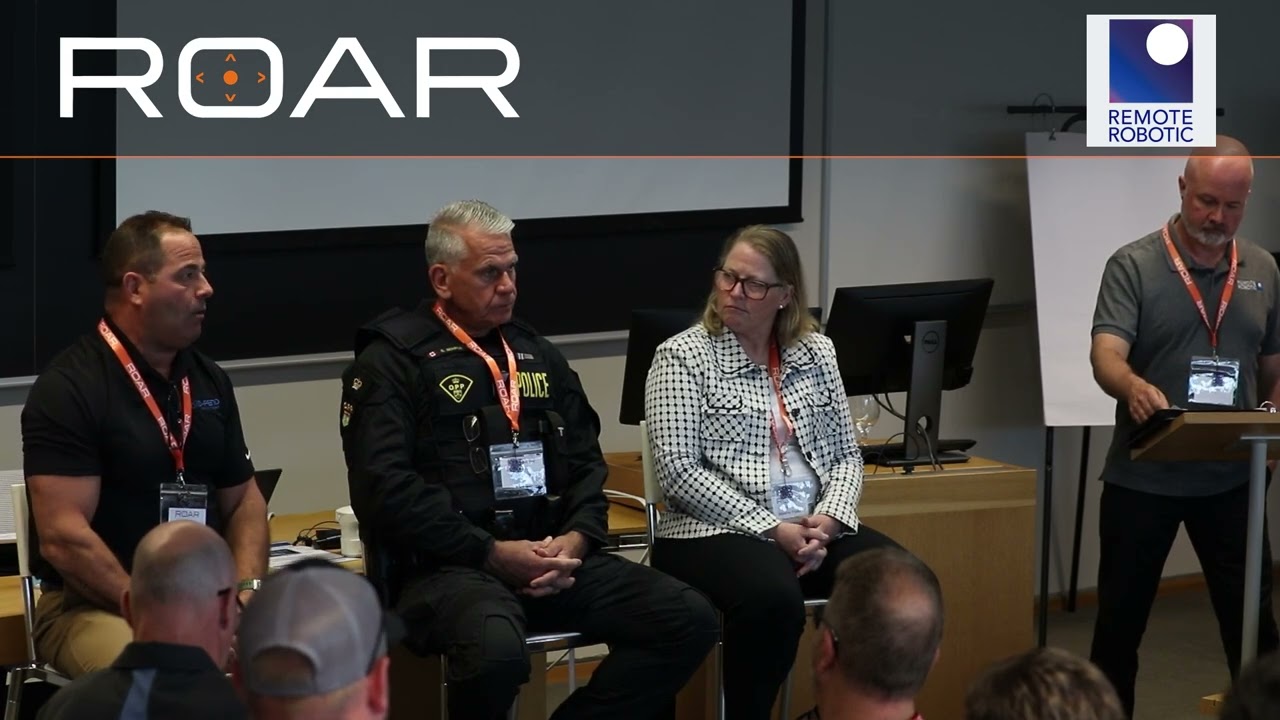
Watch on YouTube ↗A question from the floor cut to the real gap: officers on scene often can't tell a toy drone from one worth worrying about. The panel's answer was that every operation needs someone embedded who can actually read the threat — does it look like it's carrying a payload, is it likely doing surveillance — because that judgment call drives everything that follows.
That training gap cuts in an unexpected direction. It's not the senior officers who understand this technology best — it's the newest ones. The panel noted today's incoming officers often know more about drones than the leadership currently setting policy around them, and they get frustrated being held back from using tools they already understand.
Underneath the tactics is a simple asymmetry the panel kept returning to. Policing's motive is public safety; the criminal element's motive is profit — which means criminal actors are, frankly, more aligned with private-sector innovation incentives than police agencies are. The panel's own prescription was to lean harder into private-sector partnerships rather than try to out-innovate that motivation alone.
That tension is already playing out in procurement. "Drones as first responders" is the current buzzword pulling frontline policing forward, even as new restrictions on Chinese-manufactured drones complicate what agencies can actually buy and deploy — a real-time example of policy and operational need pulling in different directions.
The upside case is just as real. One panelist described watching footage of a marine rescue — an officer spotting a drowning man, unable to look away long enough to also pilot a drone — and thinking through how differently that call could have gone with a drone already airborne ahead of the boat: locating the person, tracking them, even deploying a flotation device before officers arrived. The panel's framing was direct: this is a force multiplier for public safety, not just officer safety, and the value case isn't hypothetical — it's the gap between when a drone can be overhead and when a patrol car can physically arrive.