
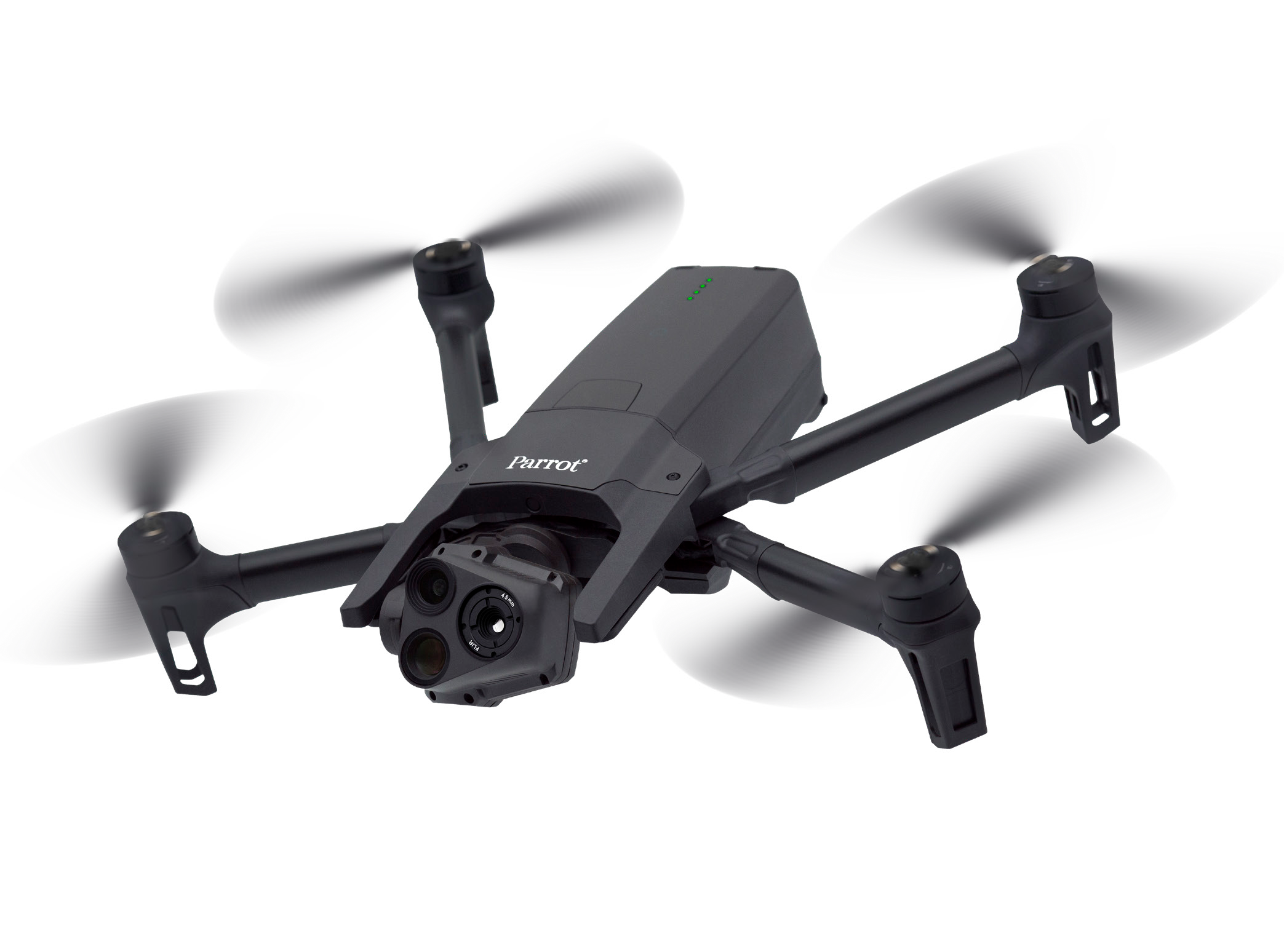
Procurement Guide
What Is NDAA? NDAA Compliance and NDAA-Compliant Drones in Canada
What NDAA compliance means for Canadian drone buyers: RCMP and Ontario restrictions, Canadian-made vs. Blue UAS, NDAA 2027, and a procurement checklist.
Remote Robotic · October 5, 2026 · 14 min read
"NDAA compliant" used to be a U.S. government purchasing term. In Canada, it has become one of the most common requirements in drone tenders from police services, government departments, utilities and critical infrastructure operators.
In the past year, the RCMP restricted its Chinese-made drones, Ontario banned them for sensitive provincial police work, and Ottawa launched a defence drone program built around Canadian suppliers. Canadian buyers need to understand what NDAA compliance means and how it fits with Canada's own rules.
This guide explains what the NDAA is, what NDAA compliance means, where the NDAA 2027 bill stands, and what all of it means for drone programs in Canada.
What does NDAA stand for?
NDAA stands for the National Defense Authorization Act. It's the annual U.S. law that sets the budget, policies and priorities for the U.S. Department of Defense and national security programs.
What is the NDAA? (NDAA meaning)
The NDAA is the U.S. defence policy bill, and Congress passes one every year. It authorizes defence spending, sets military policy, and decides which technologies and suppliers the U.S. government is allowed to buy from.
That last point is why the term matters to Canadian drone operators. Several NDAAs ban U.S. government use of drones and components from companies tied to countries the U.S. considers adversaries. That standard has since been picked up by Canadian buyers.
Does the NDAA apply in Canada?
Not legally. The NDAA is U.S. law, and no Canadian statute requires NDAA compliance.
In practice, though, it matters a great deal. Canadian organizations use NDAA compliance as:
- A procurement standard: a clear, recognized way to write supply-chain security into a tender
- A security baseline: for police, government and critical infrastructure data
- A cross-border requirement: for Canadian companies supplying U.S. government, defence or federally funded programs
- An interoperability standard: for work with U.S. and other Five Eyes partners
Why NDAA compliance is now a Canadian issue
Canada doesn't have an NDAA of its own, but Canadian governments have started moving in the same direction.
RCMP restricts Chinese-made drones (December 2025)
The RCMP restricted 973 Chinese-made drones, about 80% of its fleet, to non-sensitive work only. Those drones can still be used for missing person searches, car theft investigations and community policing. They can't be used for VIP protection, border integrity work or investigations involving U.S. authorities. Replacing them was estimated to cost more than $30 million.
Ontario bans Chinese-made drones for sensitive OPP work (May 2026)
On May 20, 2026, Ontario restricted Chinese-made drones from highly sensitive Ontario Provincial Police operations. It also announced a broader phase-out across provincial government use as replacements become available. The policy is tied to Ontario's Buy Ontario Act and procurement directive.
Canada's Defence Drone Initiative (2026)
The federal government's Defence Drone Initiative supports Canada's Defence Industrial Strategy. It focuses on giving the Canadian Armed Forces faster access to Canadian-developed uncrewed systems. In September 2026, Canadian suppliers were selected across its capability streams, with low-cost tactical ISR drones as the first priority.
Federal cyber security guidance
The Canadian Centre for Cyber Security advises organizations using drones to:
- Demand supply-chain transparency from vendors
- Limit cloud dependence and protect stored data with encryption
- Choose secure-by-design manufacturers
- Control firmware updates carefully
- Treat drones as untrusted devices on the network
What this means: Canadian public sector and critical infrastructure buyers increasingly expect drones that are not Chinese-made, have a transparent supply chain, and handle data securely. NDAA compliance is the easiest recognized way to show that.
What is NDAA compliance?
NDAA compliance means a product meets the U.S. NDAA's supply-chain restrictions. It has nothing to do with performance. It depends on who made the product and where its critical parts came from.
A drone is generally not NDAA compliant if its manufacturer or critical components are tied to:
- China
- Russia
- Iran
- North Korea
What is NDAA compliant? The three-part test
A drone is generally treated as NDAA compliant only if it passes all three of these checks:
- Manufacturer: It isn't owned, controlled or influenced by a covered foreign entity.
- Critical components: Flight controllers, radios and data links, cameras, gimbals, ground control systems and operating software don't come from covered sources.
- Software and data: Firmware, flight logs and imagery don't route through restricted infrastructure.
If a drone fails any one of the three, it isn't compliant.
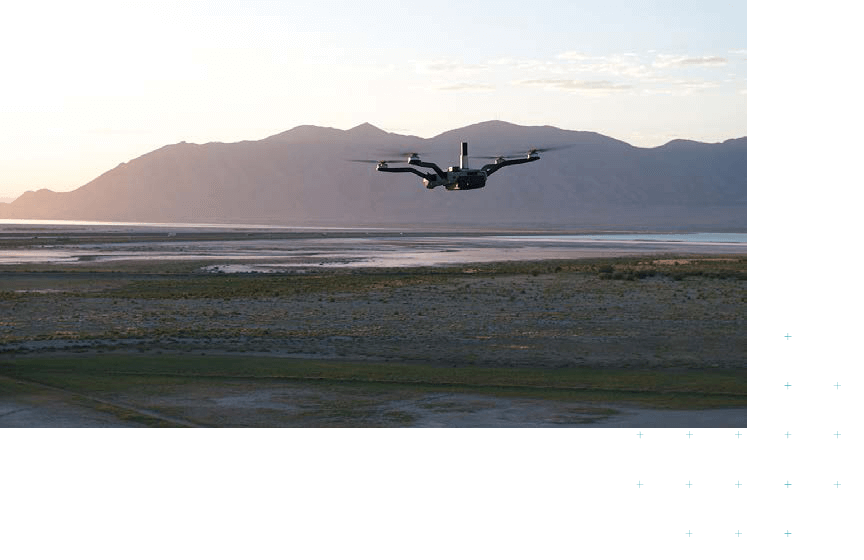
The U.S. NDAA sections behind the standard
| U.S. law | What it did |
|---|---|
| FY2020 NDAA, Section 848 | Banned the U.S. Department of Defense from buying or operating drones and critical components from covered countries. This is the original "NDAA compliant" standard. |
| FY2023 NDAA, Section 817 | Strengthened and extended the DoD restrictions. |
| FY2024 NDAA, American Security Drone Act | Extended the restrictions to all U.S. federal agencies and federally funded programs, in full effect since December 22, 2025. |
| FY2025 NDAA, Section 1709 | Triggered a U.S. security review that led the FCC, in December 2025, to add foreign-made drones and critical components to its Covered List. That blocks new models from FCC authorization in the U.S. |
For Canadian operators: the FCC Covered List applies only in the U.S. It doesn't affect drones you already own or Transport Canada rules. But it does affect Canadian companies that work in the U.S. or bring equipment across the border, and it's shaping how manufacturers plan their North American product lines.
Free resource
NDAA / Blue UAS Buyer's Guide — Canada (2026)
Every Section 848 compliant aircraft Remote Robotic supplies in Canada — Parrot ANAFI USA/UKR, Teal Black Widow, FreeFly Astro, Inspired Flight — with use-case matrix, specs, and procurement guidance.
The NDAA bill and the NDAA 2027 vote
Each NDAA goes through committee markups, House and Senate floor votes, a compromise negotiation, final passage and the President's signature.
NDAA 2027: where it stands (October 2026)
- House: passed H.R. 8800 on July 22, 2026, by a vote of 216–212.
- Senate: the Senate version, S. 4784, failed a cloture vote 50–46 on July 14, 2026.
- Status: the U.S. fiscal year 2027 began October 1 without an enacted NDAA. Final action is expected in the lame-duck session after the Senate returns in November.
The FY2026 NDAA was signed into law on December 18, 2025. It created the SkyFoundry program to expand U.S. production of small drones.
Why Canadians should watch NDAA 2027: new U.S. drone and component restrictions tend to flow into Canadian tenders, cross-border contracts and manufacturer supply chains within months.
NDAA compliance list: is there an official list?
There's no single official NDAA compliance list. Canadian buyers usually check two U.S. lists:
1. Blue UAS Cleared List (approved)
This is the U.S. Department of Defense's list of vetted drone platforms. Each platform goes through a company analysis, a supply chain teardown and a cybersecurity assessment. Since January 1, 2026, the list has been managed by the Defense Contract Management Agency (DCMA), after previously being run by the Defense Innovation Unit.
2. FCC Covered List (restricted)
This is the U.S. list of equipment considered a national security risk.
NDAA compliant vs. Blue UAS
- NDAA compliant: the drone meets the supply-chain requirements.
- Blue UAS: the drone has been independently vetted and cleared by the U.S. DoD.
Every Blue UAS drone is NDAA compliant, but not every NDAA-compliant drone is Blue UAS. Most Canadian tenders ask for NDAA compliance. Blue UAS is usually requested for defence, border or high-security work.
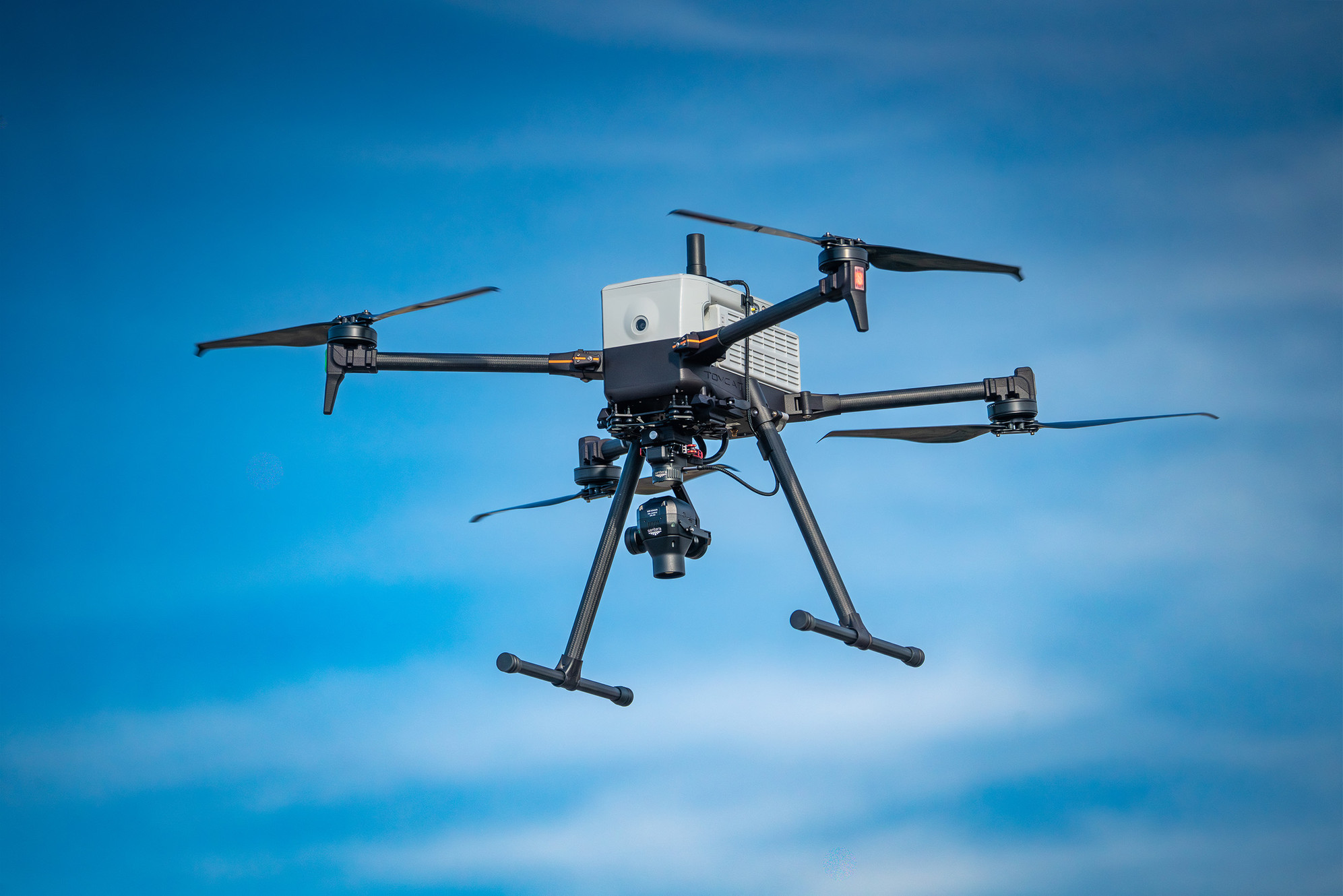
NDAA compliant vs. Canadian-made
These are different things:
- NDAA compliant means no covered-country manufacturer or components.
- Canadian-made means designed or built in Canada. This is the focus of programs like the Defence Drone Initiative and Ontario's Buy Ontario rules.
A drone can be one, both or neither. Some Canadian programs now ask for both.
Who in Canada needs NDAA-compliant drones?
| Organization | Why NDAA compliance matters |
|---|---|
| Federal departments and agencies | Security policies, data protection, alignment with allies |
| RCMP and police services | Sensitive investigations, VIP protection, border work, joint operations with U.S. agencies |
| Provincial governments | Policies like Ontario's restrictions on Chinese-made drones |
| Fire, EMS and emergency management | Grant conditions, municipal security policies |
| Utilities and critical infrastructure | Cybersecurity and data sovereignty requirements |
| Defence and aerospace suppliers | Contracts with DND, the U.S. DoD or U.S. primes |
| Companies working in the U.S. | U.S. federal contracts and federally funded projects |
| Indigenous, municipal and port authorities | Security of sensitive sites and data |
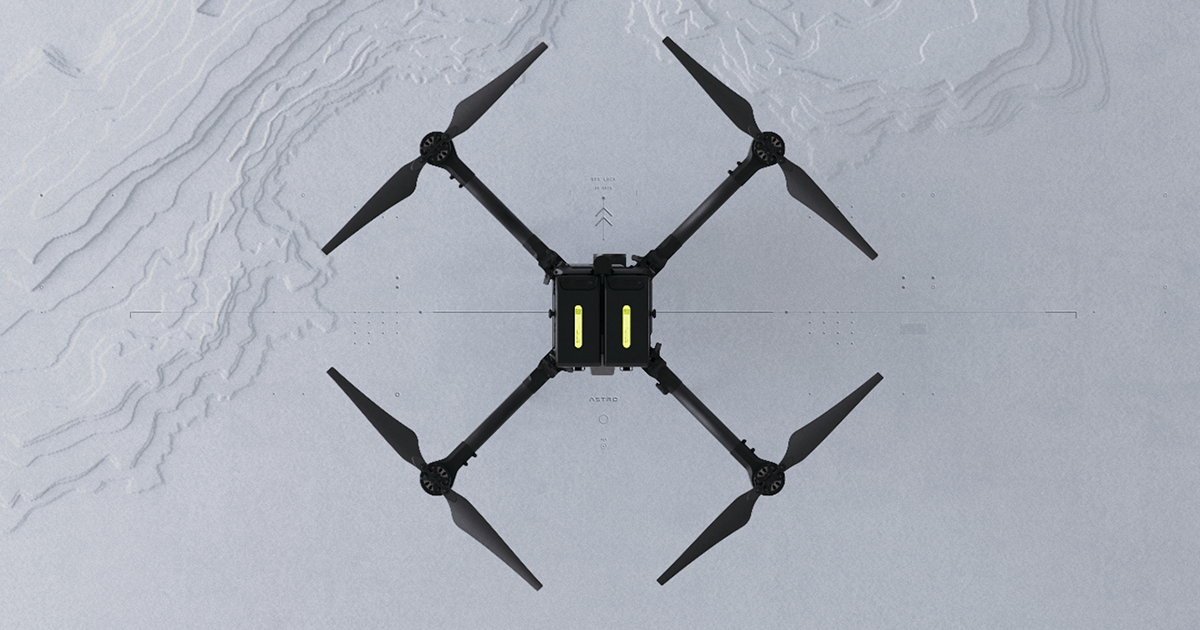
NDAA-compliant drones available in Canada
| Mission | NDAA-compliant platforms |
|---|---|
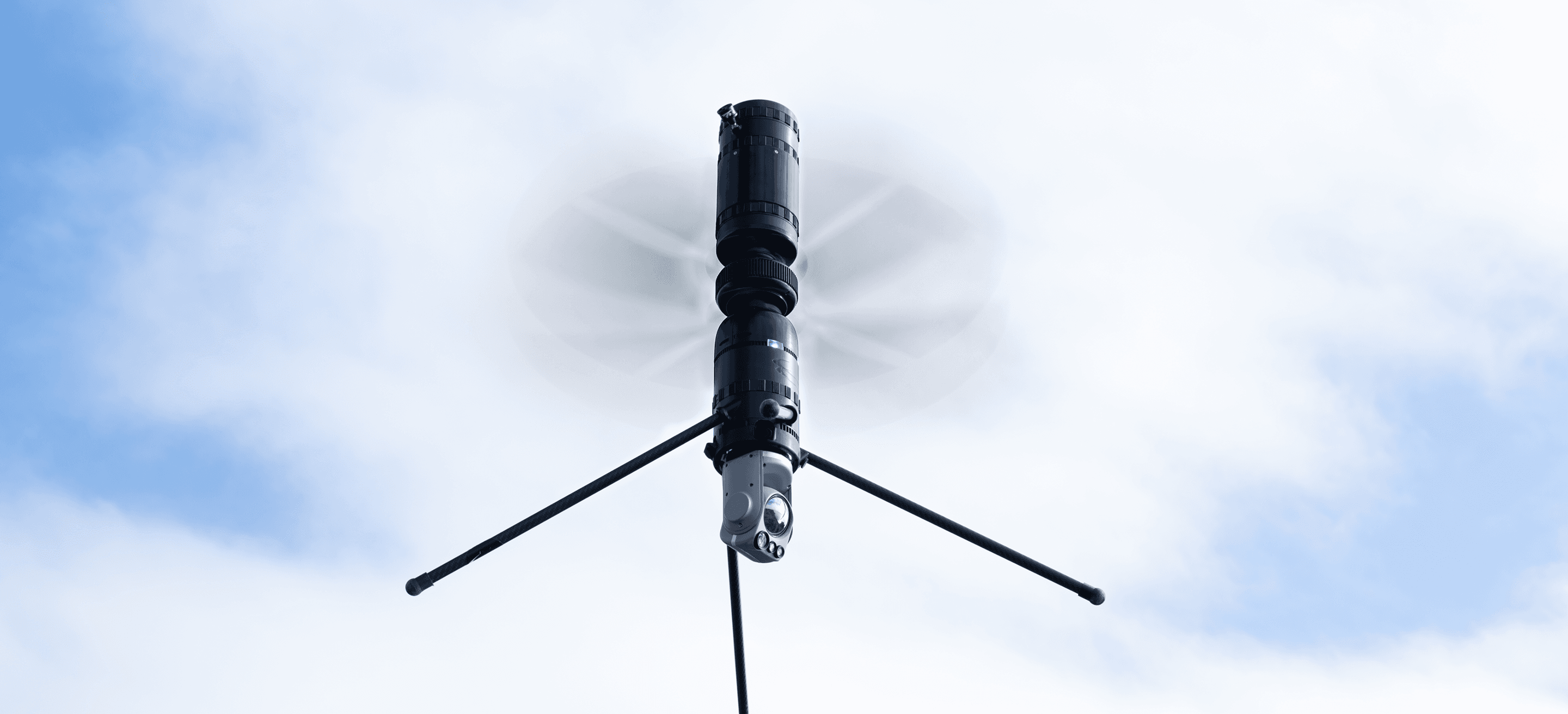
| Police, public safety and tactical ISR | Parrot ANAFI USA, Teal Black Widow |
| Heavy-lift and enterprise payloads | Inspired Flight IF800, Freefly Astro |
| Rugged and long-endurance operations | Ascent AeroSystems Spirit |
Are DJI drones NDAA compliant?
No. DJI is a Chinese manufacturer, so its drones aren't NDAA compliant.
Can you still use DJI drones in Canada? Yes. DJI drones remain legal for commercial use in Canada under Transport Canada rules, and they're widely used in construction, mining, agriculture, energy and inspection.
But for sensitive government, police, border, defence and critical infrastructure work, more Canadian buyers are moving to NDAA-compliant or Canadian-made platforms. The RCMP and Ontario policies are clear signs of that shift.
Many organizations end up running a mixed fleet: DJI for general commercial work, and NDAA-compliant drones for sensitive missions.
How to buy NDAA-compliant drones in Canada: a checklist
- Define your requirement. Decide whether you need NDAA compliance, Blue UAS clearance, Canadian-made content, or a combination.
- Write it into your tender. Spell out the standard, the documentation you need and how you'll check it.
- Ask for proof. Get a written NDAA compliance statement from the manufacturer for the exact model and configuration.
- Check payloads and accessories. Cameras, radios, batteries and ground stations count too, not just the airframe.
- Review data handling. Confirm where data is stored, whether it goes to the cloud, and how firmware is updated. This is in line with Canadian Centre for Cyber Security guidance.
- Plan your transition. If you're replacing a DJI fleet, phase it in by mission sensitivity.
- Stay compliant with Transport Canada. Pilot certification, operational rules and any SFOC or BVLOS approvals still apply, whatever drone you choose.
Frequently asked questions
- What does NDAA stand for?
- National Defense Authorization Act, the annual U.S. defence law.
- Is NDAA compliance required in Canada?
- Not by law. But it's increasingly required by Canadian government, police and critical infrastructure tenders, and by any contract tied to U.S. federal funding.
- What does NDAA compliant mean?
- The drone's manufacturer, critical components and software aren't tied to China, Russia, Iran or North Korea.
- Has Canada banned DJI drones?
- No, not nationally. But the RCMP restricted its Chinese-made drones to non-sensitive work in December 2025, and Ontario banned them for sensitive OPP work in May 2026, with a wider provincial phase-out planned.
- Is there an NDAA compliance list?
- There's no single official list. The U.S. Blue UAS Cleared List, now managed by DCMA, is the main reference for approved drones.
- What happened in the NDAA 2027 vote?
- The U.S. House passed the FY2027 NDAA 216–212 on July 22, 2026. The Senate version stalled, and final action is expected in late 2026.
- Are Canadian-made drones automatically NDAA compliant?
- No. Being made in Canada doesn't guarantee compliance. Critical components and software still need to come from non-covered sources.
Build an NDAA-compliant drone program in Canada
Remote Robotic supplies NDAA-compliant drones and robotics to Canadian government, police, public safety and critical infrastructure teams. We can help you choose the right compliant platform for each mission, gather compliance documentation for your tender, and plan a move away from a Chinese-made fleet.
Explore our NDAA and Blue UAS solutions, request a quote, or call 416-303-3575.