
Confined-Space Inspection
From Two Days to Four Hours: How Imperial Oil Rethought Confined-Space Shutdown Inspections
A ROAR West conversation with Imperial Oil's UAS expert on how a caged confined-space inspection drone cut shutdown inspection time from two days to four hours — and removed people from one of refining's highest-risk tasks.
Remote Robotic · October 22, 2026 · 4 min read
Watch the ROAR West conversation
Watch on YouTube ↗When a refinery shuts down a vessel or tank for inspection, every hour of downtime has a cost attached to it
Historically, getting a human inspector safely into a confined space has meant isolating and de-energizing all power to the equipment, rigging scaffolding, ropes, and lighting, and only then sending someone in — a process that, at Imperial Oil, could take up to two full days before an inspector ever laid eyes on the equipment.
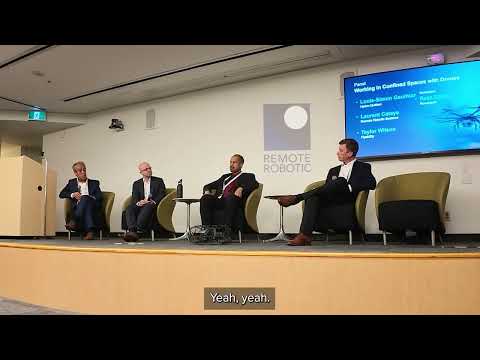
Nathan Workington, Imperial's UAS subject matter expert, described the shift bluntly in a recent ROAR West conversation with Remote Robotic: "With this system, we've been able to do it in four hours, because we didn't have to send someone in and shut down everything."
The system in question is a caged confined-space inspection drone — Imperial's newest addition to its fleet, first deployed at Cold Lake. In just the first few weeks of operation, it had already flown inside three different tanks and vessels. The impact was immediate: Imperial estimates it has clawed back as much as two days of shutdown time per inspection on some operations.
Run the math across a shutdown schedule
Two fewer days offline on a single shutdown means two additional days of production uptime — multiplied across every asset where this becomes standard practice. And the number gets serious fast.
But the story isn't only about speed
It's about what you no longer have to ask a person to do. "We always look at it as a multifactor," Workington explained. "We want to be able to not only save money, save time, but also reduce safety risk." Eliminating the need to send a person into a confined space — hanging off ropes, inside a vessel that recently held hydrocarbons — removes one of the highest-risk activities in refinery maintenance, full stop.
What made this an easy internal sell wasn't abstract ROI modeling
It was the data. "It was slow at first, until you start delivering that end data product," Workington said of internal adoption. "They're seeing things in ways they've never seen them before." Once shutdown teams saw they could get a confined-space inspection on demand — without waiting on a vendor call-out — adoption accelerated on its own.
Owning and operating the equipment internally
That last point matters for any organization evaluating this kind of technology: owning and operating the equipment internally, rather than relying on a vendor for every inspection, was what turned an interesting pilot into a standard operating tool. When your team can deploy a drone the moment a vessel opens up, instead of waiting hours or days for an external crew, the time savings compound.
Imperial's confined-space drone program is one piece of a much broader robotics strategy that now spans flare stack and pipeline inspection, Spot robot dogs reading analog gauges, and remote drone operations flown from hundreds of kilometers away. But it's a clear, concrete illustration of a pattern worth paying attention to: the biggest wins in industrial robotics often aren't about flashy new capability — they're about collapsing the time between "we need to look at this" and "we looked at it," safely.
If you're asking that question about your own confined spaces, take a look at our confined-space inspection drones and utility inspection solutions, or ask about a managed inspection program.
Shop the story
Related products in our catalog
Every product below is stocked and supported by Remote Robotic in Canada.