

Industrial Brief
DJI Matrice 4T for Oil & Gas: Thermal Inspection, Facility Rounds & Emergency Response
The DJI Matrice 4T for oil & gas facility inspection — integrated radiometric thermal, 112x zoom, and a 1,800 m laser rangefinder for tank scans, facility rounds, and emergency response. 49-min flight, RTK, AVSS parachute. Verified specs and Canadian use cases.
Remote Robotic · July 21, 2026 · 7 min read
Last verified against DJI's published Matrice 4 Series specifications: July 2026.
Why the Matrice 4T Fits Oil & Gas Inspection
Oil & gas inspection is a scale-and-safety problem — assets spread across remote pads, gathering systems, and sprawling plants, with the highest-value targets being the ones you don't want a person climbing to. A lot of the daily work is getting a calibrated thermal and zoom look at an asset, fast, without a shutdown or a permit. The aircraft that gets used is the one an operator can pull from a truck and launch in minutes.
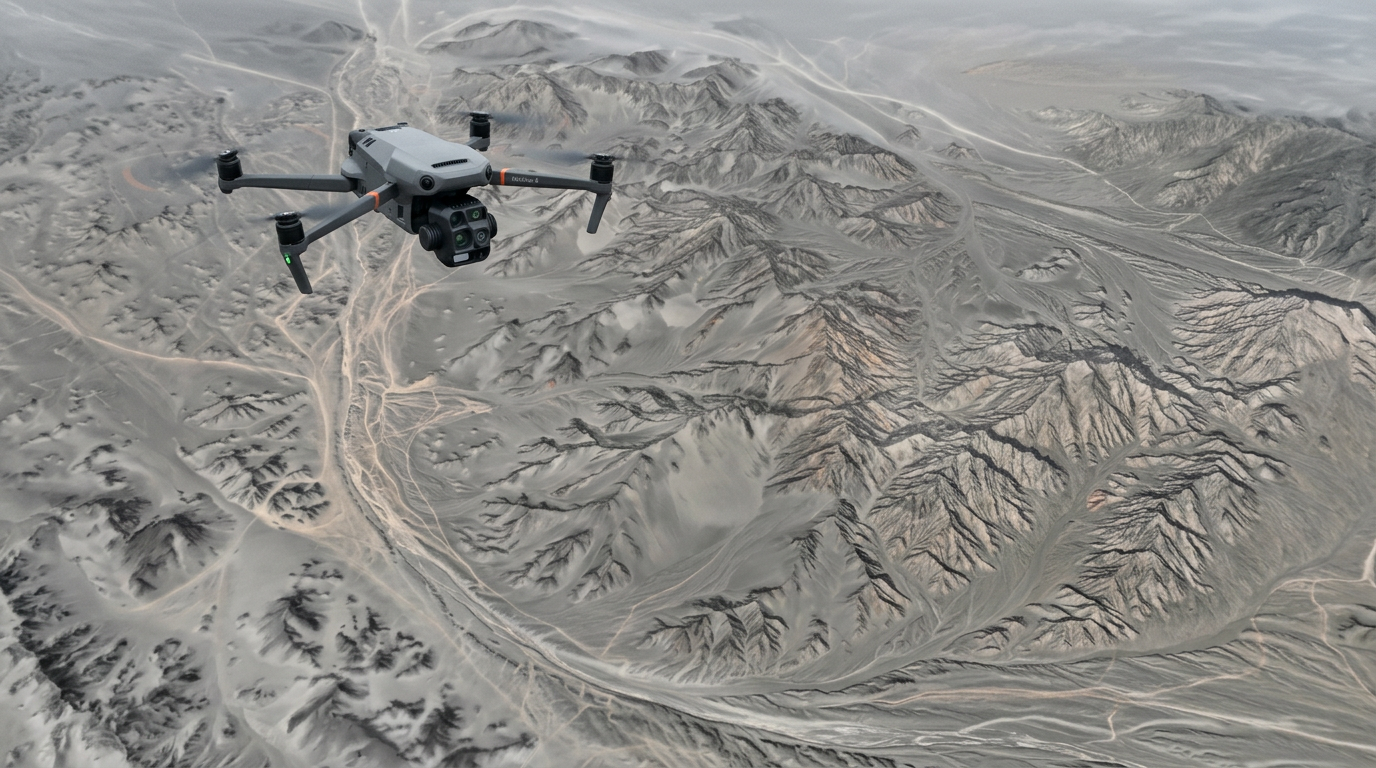
The Matrice 4T is that aircraft. DJI builds it for inspection-class work — infrastructure, emergency response, and public safety — with an integrated sensor package that would otherwise need a much larger platform: a 640 × 512 radiometric thermal camera accurate to ±2°C, a three-camera visual system spanning wide to 168 mm telephoto (112x hybrid zoom), and a laser rangefinder that measures and geolocates a target to 1,800 m. It folds to backpack size, weighs about 1.2 kg, and holds RTK positioning to 1 cm when a job needs georeferenced records.
The Operational Advantage
| Oil & gas job | What the Matrice 4T brings | On the aircraft / catalog |
|---|---|---|
| Tank & vessel thermal scans | Radiometric 640 × 512 thermal, ±2°C, at a safe standoff | Integrated thermal camera |
| Facility & pipe-rack inspection | 112x hybrid zoom to read fittings and corrosion from the ground | Triple visual camera |
| Asset height & clearance measurement | Distance and geolocation to 1,800 m | Laser rangefinder |
| Fast pad & pipeline asset checks | Grab-and-go 49-min flights, omnidirectional sensing | Folding 1.2 kg airframe |
| Emergency & incident overflight | Live thermal + visual on spills and fires, day or night | Thermal + NIR light |
| Over-people flight mitigation | Deployable parachute recovery for populated areas | AVSS Parachute Recovery System |
| Autonomous facility rounds (ground) | Gauge, leak, and thermal rounds in classified zones | Boston Dynamics Spot |
DJI Matrice 4T Key Specifications for Oil & Gas Work
| Specification | DJI's published figure (Matrice 4T) |
|---|---|
| Takeoff weight | 1,219 g (standard propellers) |
| Max takeoff weight | 1,420 g |
| Max payload | 200 g |
| Max flight time (no wind) | 49 min |
| Max hover time (no wind) | 42 min |
| Max horizontal speed | 21 m/s |
| Max wind speed resistance | 12 m/s (takeoff and landing) |
| Operating temperature | -10°C to 40°C |
| Ingress protection (aircraft) | No standard rating (see weather note) |
| Max altitude | 6,000 m (4,000 m with payload) |
| RTK positioning accuracy | 1 cm + 1 ppm (H), 1.5 cm + 1 ppm (V) |
| Hovering accuracy (RTK) | ±0.1 m |
| Visual cameras | Wide + medium tele + tele, all 48 MP; 112x hybrid zoom |
| Thermal camera | 640 × 512, uncooled VOx, ±2°C accuracy (high gain) |
| Laser rangefinder | 1,800 m measurement range |
| Sensing | Omnidirectional binocular vision + downward 3D infrared |
| Video transmission | O4 Enterprise; 25 km FCC / 12 km CE |
| Battery | 99.5 Wh, 200-cycle rating |
Per DJI's footnotes, flight-time and range figures were measured in windless conditions without payload and are reference data — real-world numbers vary with wind, altitude, accessories, and firmware.
What Can the Matrice 4T Do Across an Oil & Gas Operation?
Six jobs cover most of what the 4T does well on a Canadian upstream, midstream, or downstream program. Each maps to a specific, verified capability.
1. Tank & Vessel Thermal Scans
Storage tanks and process vessels show level, sludge, and insulation issues thermally before they're visible. The 4T's integrated 640 × 512 radiometric thermal camera reads surface temperature to ±2°C at a safe standoff, so an operator can scan tank exteriors, roofs, and insulation for anomalies without scaffolding or a person at height.
Why it matters: read tank and vessel condition thermally, from the air, without scaffolding or a permit.
2. Facility & Pipe-Rack Visual Inspection
Pipe racks, valve stations, and structural steel need routine visual checks that are slow to do on foot. The 4T's triple-camera system reaches 112x hybrid zoom, so a crew reads fittings, corrosion, and flange condition from a safe standoff, covering a facility far faster than a ground walkdown.
Why it matters: read fittings and corrosion across a facility at zoom, without a full ground walkdown.
3. Asset Measurement & Documentation
Verifying a stack height, a clearance, or the distance to an asset usually means a crew and a guess. The 4T's built-in laser rangefinder measures point-to-target distance to 1,800 m and geolocates the target, so measurements get taken and documented from the air.
Why it matters: documented height and clearance measurements without a ground crew.
4. Fast Pad & Pipeline Asset Checks
Wellpads and gathering lines are spread across distance that's slow to drive. The 4T deploys from a case in minutes and flies up to 49 minutes, so an operator can get a quick thermal-and-visual look at a pad, a compressor, or a stretch of line without mobilizing a larger aircraft.
Why it matters: quick eyes on remote pads and lines without a full mission setup.
5. Emergency & Incident Response
Spills, fires, and well-control incidents need eyes on the situation before crews commit. The 4T's thermal payload and night-scene imaging give an incident commander a live thermal and visual picture from a standoff, day or night — and the laser rangefinder geolocates hazards directly from the flight.
Why it matters: a live thermal read on a fire or spill before anyone walks into it.
6. Over-People & Populated-Area Inspection
Some facilities and gathering systems run near roads, worksites, and people not involved in the operation. A deployable parachute is the recognized ground-risk mitigation for flying over uninvolved people — covered in the compliance section below — and the 4T is light and quick enough to make routine inspection near occupied areas practical.
Why it matters: inspect assets near occupied areas with a recognized ground-risk mitigation in place.
A Note on Classified Zones
Oil & gas facilities have hazardous (classified) areas where ignition risk governs what equipment can operate. The Matrice 4T is not an intrinsically safe / explosion-proof aircraft, so plan flights to respect classified-area boundaries. The practical pattern most operators use: fly the overhead thermal and visual coverage from outside or above the classified envelope, and pair it with intrinsically safe portable instruments for work inside it. We scope this with you as part of program design.
Where the 4T Stops and the Bigger Platforms Start
The Matrice 4T is a compact inspection aircraft with a 200 g payload allowance — it does not carry gimbal payloads. For the oil & gas jobs that need a dedicated sensor, the heavier Matrice 400 is the companion platform: a 6 kg payload airframe that carries TDLAS methane sniffers and the Zenmuse H30T for LDAR and flare-stack programs, with IP55 weather sealing and a -20°C envelope for year-round work. Most oil & gas programs run the two together — the 4T for fast daily facility inspection, the M400 for methane and flare work. We deploy all of them:
| Job | Right platform | Why |
|---|---|---|
| Tank / facility thermal & visual | Matrice 4T | Integrated thermal + 112x zoom + rangefinder, fast deploy |
| Methane & VOC leak detection (LDAR) | Matrice 400 + TDLAS sniffer | Dedicated gas-detection payload beyond the 4T's lift |
| In-service flare-stack inspection | Matrice 400 + Zenmuse H30T | Larger radiometric payload at safe standoff |
| In-service tank & vessel internals | Terra Xross1 Indoor Drone | Confined-space inspection without entry permits |
| Autonomous facility ground rounds | Boston Dynamics Spot | Gauge, leak, and thermal rounds at grade |
We scope the mix against your asset mix and deliverables rather than force one aircraft onto every job — ask us about the right platform for methane or flare work alongside your 4T.

Does the Cold and Weather Affect Operations?
It's a real planning factor for facility work, and it comes down to two things: temperature and ingress protection.
Temperature. The Matrice 4T is rated to -10°C, and its Intelligent Flight Battery does not support low-temperature charging. For Canadian winter inspection, keep batteries warm until launch and plan shorter flights in the cold.
Ingress protection. This is the one to plan around for outdoor facility work: the standard Matrice 4T (and 4E) carry no official IP rating — DJI lists "no standard protection level" — so they shouldn't be flown in rain or heavy wet snow, which limits foul-weather inspection and incident-response timing. If all-weather capability is central to your program, the Matrice 4TD / 4D is the answer: these are the IP55-rated variants of the Matrice 4 Series, sealed against dust and sustained water jets and rated to a much colder -30°C. The 4TD can be operated as a standalone manually piloted aircraft or deployed in the DJI Dock 3 for automated, recurring rounds — so the same weather-hardened platform covers both hand-flown inspections and pilot-free scheduled facility rounds. For a Canadian operator that needs to inspect through rain, snow, and deep cold — or run dock-based facility rounds year-round — that IP55 rating is what keeps the program running when the weather turns.
For sustained sub-zero or all-weather programs, we'll help you decide between the standard 4T and the IP55-rated, dock-capable 4TD.
What About Flying Near Facilities and Over People?
Facility inspection routinely means flying near infrastructure and sometimes over people not involved in the operation — contractors, traffic, or occupied areas near a plant or gathering system. The rules run through Transport Canada, not the spec sheet. At about 1.2 kg the Matrice 4T sits well within the small-RPAS class, so operating near or over people is an advanced operation under CARs Part IX. That requires a pilot certified for Advanced Operations, NAV CANADA authorization in controlled airspace, and a valid RPAS Safety Assurance declaration for that operation. We support Transport Canada Advanced Operations, BVLOS pathways, airspace authorization, and SFOC applications as part of a program — ask us to scope the regulatory footing for your asset mix.
Parachute for over-people flight: for the Matrice 4T we supply the AVSS Parachute Recovery System for the DJI Matrice 4 Series — a 149 g bolt-on that mounts without interfering with the aircraft's GPS, deploys in under 0.5 seconds, integrates a flight-termination system that cuts the motors on activation, and brings the aircraft down at a controlled ~3.8 m/s. It ships with the compliance documentation (ASTM F3322 / EASA MOC) that supports operations over people, and is designed to support Transport Canada frameworks for flight over people — the recognized ground-risk mitigation for inspecting assets near occupied areas. We'll scope the parachute into your operational approvals and confirm the current Canadian regulatory pathway for your work.
Common Questions
What's the best payload for methane leak detection?
Methane detection needs a dedicated gas-detection payload — the SPH Engineering Laser Falcon Plus TDLAS for point-source localization or the FluX Aero for area screening — which mount on the heavier DJI Matrice 400, not the 4T. The 4T handles facility thermal and visual inspection; we pair it with the right methane platform for LDAR programs.
Can drones inspect flare stacks while in service?
Yes, but flare-stack work uses the DJI Matrice 400 with the Zenmuse H30T radiometric payload at a safe standoff. The compact 4T covers tank and facility thermal inspection rather than flare tips.
Can the Matrice 4T operate in Class 1 Div 2 zones?
No — the 4T is not intrinsically safe or explosion-proof. We plan routes that keep it outside or above classified areas while still covering most assets thermally and visually, and pair intrinsically safe portable instruments for work inside classified zones.
Does the Matrice 4T have an IP rating for wet weather?
The standard 4T has no official IP rating and shouldn't be flown in rain. The IP55-rated Matrice 4TD is the all-weather, dock-capable option for year-round outdoor facility rounds.
Can the Matrice 4T fly over people at a facility?
Flying over uninvolved people is an advanced operation under Transport Canada rules. With the AVSS parachute recovery system fitted as ground-risk mitigation and the right approvals, it's a practical option — we scope the regulatory pathway with you.
The Bottom Line for Canadian Oil & Gas Operators
The Matrice 4T is the fast-deploy inspection tier of an oil & gas program: an integrated radiometric thermal camera, a 112x hybrid-zoom triple camera, and a 1,800 m laser rangefinder in a folding 1.2 kg airframe that launches in minutes. It's the right tool for tank and vessel thermal scans, facility and pipe-rack inspection, fast pad checks, and emergency overflight — and the honest answer is that methane LDAR and in-service flare-stack inspection belong on the heavier Matrice 400 with dedicated TDLAS or radiometric payloads.
Three things to settle before you commit: match the aircraft to the job (4T for facility thermal and visual, the Matrice 400 for methane and flares), plan around classified-zone boundaries since the aircraft isn't intrinsically safe, and plan around weather — the standard 4T has no IP rating, so for all-weather or dock-based rounds the IP55 Matrice 4TD is the platform.
If you're building an oil & gas inspection program, request a proposal. Tell us your asset mix — wells, gathering systems, plants, or pipelines — and we'll scope hardware, parachute, and training.
Matrice 4T vs 4E vs 4TD: Which DJI Matrice 4 Is Right for Oil & Gas?
DJI's Matrice 4 Series comes in variants that look nearly identical but do different jobs. Here's how they line up for an oil & gas inspection program — and when each earns its place.
The Short Version
- Matrice 4T — the inspection aircraft. Choose it for tank and facility thermal, asset checks, and emergency response.
- Matrice 4E — the mapping aircraft. Choose it for facility survey, construction progress, and pipeline corridor mapping.
- Matrice 4TD — the IP55, all-weather version of the 4T. Flies standalone or in the DJI Dock 3 for automated, recurring facility rounds, and holds up in rain, snow, and deep cold.
Side-by-Side for Oil & Gas
| Feature | Matrice 4T | Matrice 4E | Matrice 4TD |
|---|---|---|---|
| DJI's intended use | Inspection, thermal, public safety | Surveying, mapping | All-weather + docked autonomous operations |
| Thermal camera | 640 × 512 radiometric | None | 640 × 512 radiometric |
| Laser rangefinder | 1,800 m | — | 1,800 m |
| Wide camera | 1/1.3-inch, 48 MP | 4/3-inch, 20 MP, mechanical shutter | Same as 4T |
| Zoom | 112x hybrid | 112x hybrid | 112x hybrid |
| IP rating | No standard rating | No standard rating | IP55 (dust + water jets) |
| Operating temperature | -10°C to 40°C | -10°C to 40°C | Down to -30°C |
| Parachute option | AVSS for Matrice 4 Series | AVSS for Matrice 4 Series | AVSS for Matrice 4 Series |
| Best for | Tank/facility thermal, asset checks, emergency | Facility survey, pipeline corridor mapping | All-weather + scheduled, pilot-free rounds |
| Deployment | Manual pilot deployment, fast setup | Manual pilot deployment, fast setup | Manually piloted or in the DJI Dock 3 |
| RTK accuracy | 1 cm + 1 ppm | 1 cm + 1 ppm | 1 cm + 1 ppm |
The 4TD is the IP55-rated, weather-hardened variant — it flies standalone or in the DJI Dock 3. Exact configuration and Canadian availability are quote-only. None of the Matrice 4 variants carry gimbal payloads; methane sniffers and radiometric flare payloads run on the heavier Matrice 400.
Which One for Your Program?
Choose the Matrice 4T if your core need is inspection and awareness — tank and vessel thermal scans, facility and pipe-rack inspection, asset measurement, fast pad checks, and emergency response. The integrated thermal camera, 112x zoom, and laser rangefinder are what set it apart.
Choose the Matrice 4E if your need is mapping — facility site survey, construction progress on a build-out, or pipeline corridor and right-of-way mapping. The 4/3-inch mechanical-shutter mapping camera is the reason it's the survey aircraft.
Choose the Matrice 4TD if you need all-weather capability (IP55, down to -30°C) or the 4T's inspection sensors running on a schedule — it flies standalone or from the DJI Dock 3 for recurring facility rounds and perimeter patrols with no pilot dispatched each time.
And for the heavy inspection jobs — methane LDAR with a TDLAS sniffer, in-service flare-stack inspection with the Zenmuse H30T, tank internals with the Terra Xross1 indoor drone, or autonomous ground rounds with Boston Dynamics Spot — those run on the heavier Matrice 400 or dedicated platforms, not the Matrice 4 Series. Most oil & gas programs pair a 4T for day-to-day facility inspection with an M400 for methane and flares and a dock-based 4TD for recurring rounds.
Not sure which fits? Talk to us — tell us your asset mix and inspection cadence, and we'll scope the right combination rather than sell you one aircraft for every job.
Sources
- DJI Matrice 4 Series specifications: enterprise.dji.com/matrice-4-series/specs
- DJI Matrice 4 Series User Manual (cameras, thermal, laser rangefinder, sensing, RTK, transmission)
- Transport Canada, Drone operation categories and pilot certificates: tc.canada.ca
Shop the story
Related products in our catalog
Every product below is stocked and supported by Remote Robotic in Canada.
- DJI Matrice 4T
DJI Matrice 4T
Multi-sensor M4 Series with thermal + NIR + laser rangefinder for inspection & public safety.
View product → - DJI Matrice 4TD
DJI Matrice 4TD
Dock-native thermal M4TD with NIR aux light — night-ops DFR and thermal patrol.
View product → - DJI Matrice 4E
DJI Matrice 4E
Compact mapping-first M4 Series with wide + medium-tele + tele cameras and laser rangefinder.
View product → - DJI Matrice 400
DJI Matrice 400
Flagship enterprise M400 airframe — 59 min flight, 6 kg payload, multi-sensor ready.
View product → - DJI Zenmuse H30T
DJI Zenmuse H30T
Wide + 34× zoom + thermal (1280×1024) + laser rangefinder + NIR — the flagship M400 payload.
View product → - AVSS Parachute Recovery System for Matrice 4 Series
AVSS Parachute Recovery System for Matrice 4 Series
Parachute recovery system for Matrice 4 Series flight-over-people planning.
View product → - DJI Dock 3
DJI Dock 3
Automated dock for Matrice 4D and Matrice 4TD remote inspection programs.
View product →