Industrial Brief
DJI Matrice 4T vs Matrice 400: Which Platform Fits Your Inspection Program?
Compare DJI Matrice 4T and Matrice 400 inspection programs by industry: energy and utility, public safety, mining, and oil and gas missions.
Remote Robotic · September 22, 2026 · 9 min read
Decision driver
Fixed sensors vs. swappable payloads.
That single design difference should drive the decision more than any spec sheet number.
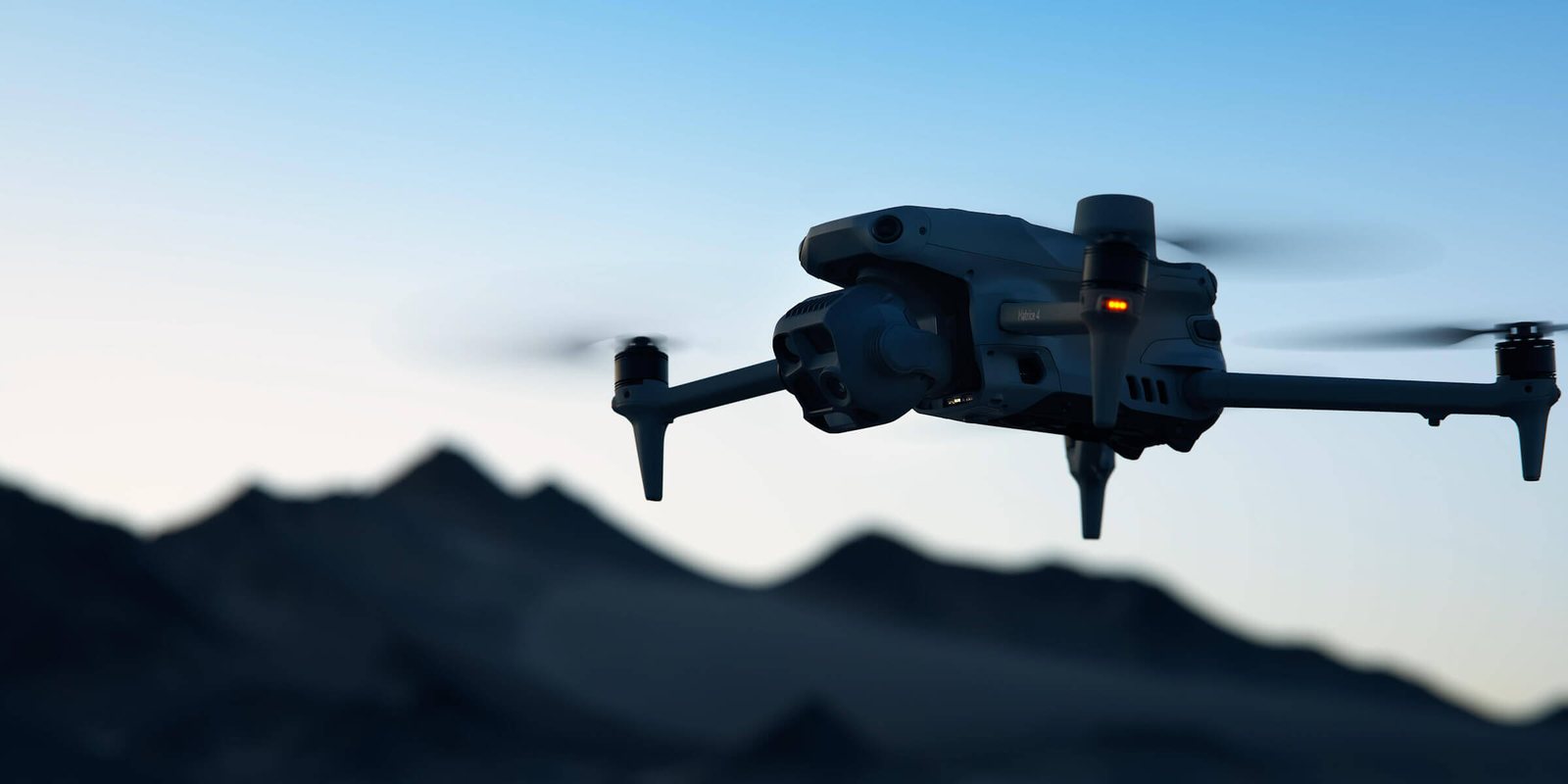
One aircraft is a compact thermal and zoom inspector. The other is a heavy modular platform for LiDAR, thermal, photogrammetry, and specialist payload work. Here is how the two DJI Enterprise platforms stack up, industry by industry.

Matrice 4T vs Matrice 400 at a glance
| Platform | What it is | Best fit |
|---|---|---|
| DJI Matrice 4T | A compact enterprise drone under 1,230 g with a fixed wide, medium-tele, 7× tele, and 640×512 thermal sensor suite built into the airframe. | Ready-to-fly inspection where speed, simplicity, thermal, and 112× hybrid zoom matter most. |
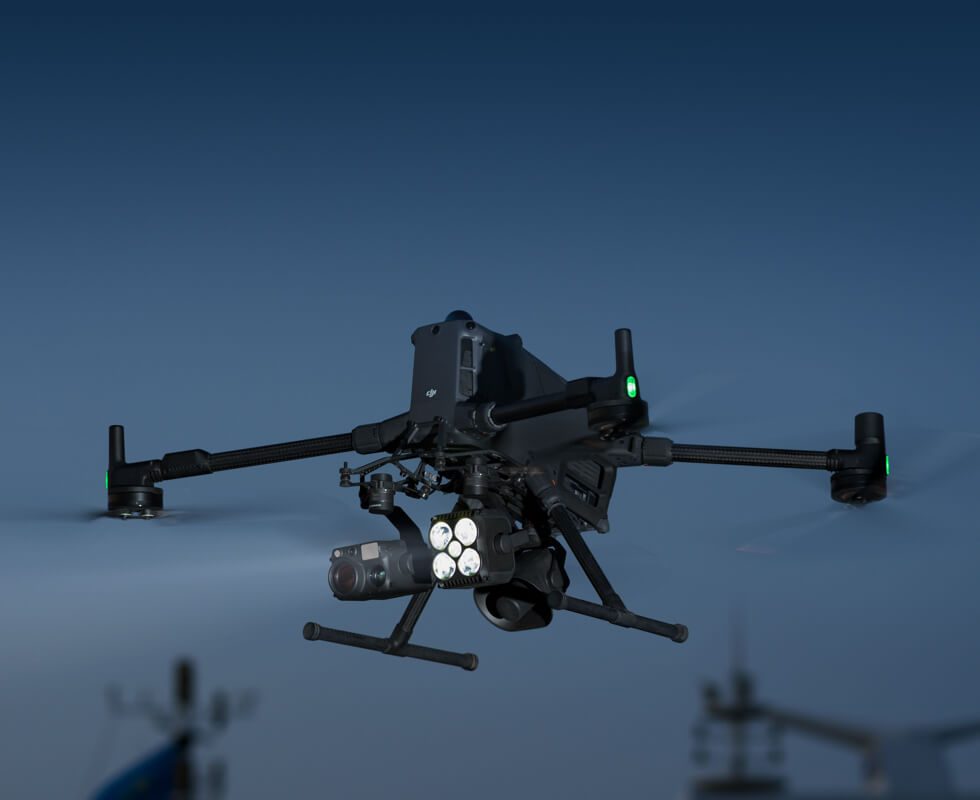
| DJI Matrice 400 | A modular flagship aircraft at roughly 9.8 kg with battery, supporting up to 6 kg across seven simultaneous payloads. | Programs that need LiDAR, thermal, photogrammetry, long endurance, harsh-weather durability, or multiple payload configurations. |
Energy & Utility
Matrice 400
Utility inspection programs typically run routine corridor patrol, vegetation encroachment surveys, and post-storm damage assessment in the same year. Each workflow asks something different of the aircraft, and that is where the M400 modular design earns its cost.
For corridor patrol and line inspection, transmission lines run through terrain often inaccessible by road: river crossings, ravines, and remote right-of-way. The M400 fused LiDAR and mmWave radar detect power lines at flight speeds up to 25 m/s, beyond what camera-only obstacle avoidance can reliably resolve.
Swap in Zenmuse L3 for point-cloud vegetation encroachment analysis, or switch to the Zenmuse H30T for thermal hotspots on connectors, transformers, and insulators. For post-storm assessment, 40 km transmission range and near-hour endurance mean fewer launch points and fewer battery swaps across a large outage area.
Read the energy and utilities guide or the powerline inspection guide.
Public Safety
Matrice 4T
Public safety work is defined by time-to-first-image. When there is a missing person, an active fire, or a suspect fleeing on foot, the department that gets a drone in the air in under a minute has an operational advantage that payload sophistication cannot make up for later.
The 4T built-in thermal camera and NIR illuminator support search and rescue in dense woods, open water, or total darkness without configuring anything. Its 112× hybrid zoom helps confirm identity from a safe standoff distance.
Fire response, patrol, and tactical support benefit from the same fixed-sensor simplicity. The lower price point makes it more realistic to equip more vehicles or station houses instead of centralizing one more expensive aircraft.
Explore the search and rescue, fire response, and policing sections.
Mining
Matrice 400
Mining sites are punishing on equipment: dust, temperature swings, and terrain that is actively reshaped by blasting and excavation. The M400 is IP55-rated and certified for −20°C to 50°C operation, conditions the 4T was not built to withstand.
With Zenmuse L3, the M400 supports stockpile and volumetric surveys through dense point clouds. With Zenmuse P1, it supports haul-road and slope monitoring with high-resolution orthomosaics and 3D models. With Zenmuse H30T, it supports thermal equipment checks and blast-site hotspot review before crews re-enter an area.
Read the mining and surveying guide.
Oil & Gas
It depends on the mission
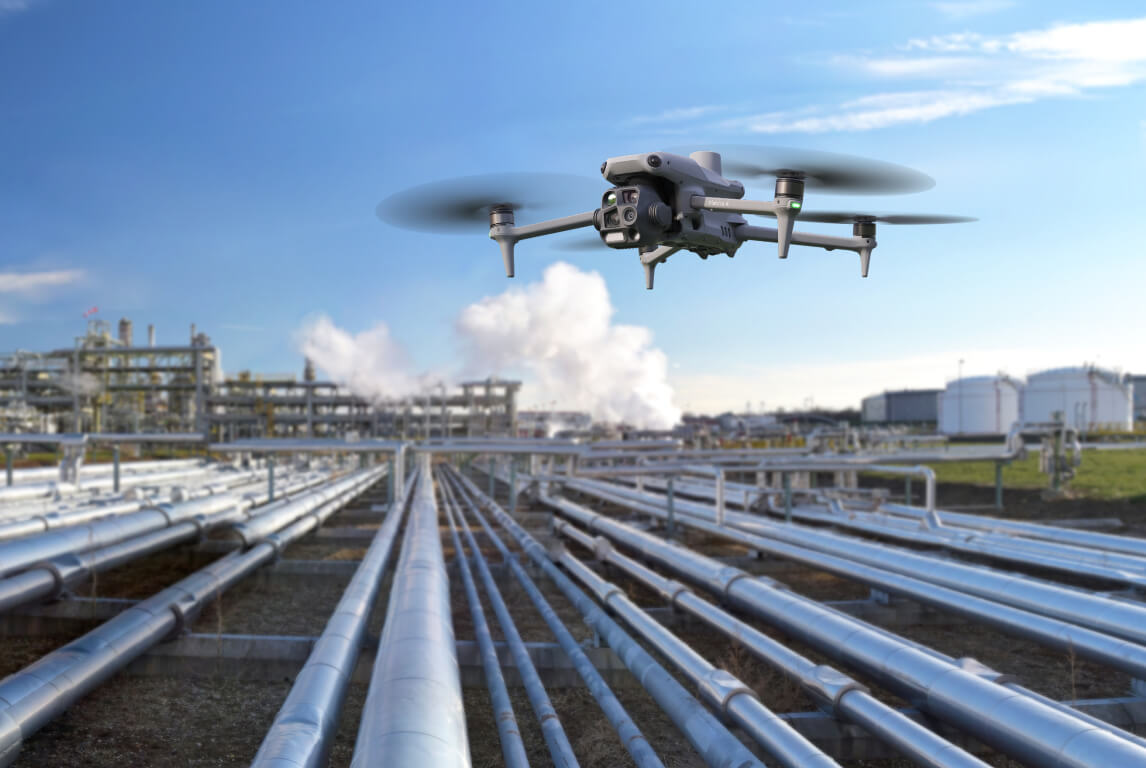
Oil and gas inspection splits into two different jobs. For fixed asset-level thermal inspection at tank farms, flare stacks, and processing facilities, the DJI Matrice 4T fits short, repeated missions focused on thermal anomalies from a safe standoff distance.
For pipeline right-of-way and wellsite surveys, the DJI Matrice 400 is the better fit. Pipeline corridors run for miles across remote, often roadless terrain, where 40 km transmission range, near-hour endurance, IP55 rating, and wide temperature certification matter more.
Many operators with both facility and pipeline assets end up running both platforms rather than forcing one to do both jobs. Read the oil and gas page and the pipeline inspection guide.
Full spec comparison
Figures from DJI Enterprise product specifications.
| Spec | Matrice 4T | Matrice 400 |
|---|---|---|
| Released | January 2025 | June 2025 |
| Max flight time | 49 minutes | 59 minutes with H30T |
| Transmission range | 35 km with standard props | 40 km with O4 Enterprise |
| Takeoff weight | Under 1,230 g | ~9.8 kg with battery |
| Payload system | Fixed multi-sensor, no swapping | Up to 6 kg, 7 payloads via E-Port V2 |
| Core sensors | Wide, medium-tele, tele, 640×512 thermal | Rotating LiDAR + 6-direction mmWave radar |
| Optical zoom | 112× hybrid zoom | Depends on mounted gimbal payload |
| Environmental rating | Not IP-rated for immersion | IP55, −20°C to 50°C |
| Obstacle sensing | Omnidirectional vision, up to 21 m/s | LiDAR + radar, power-line detection to 25 m/s |

Bottom line
Which inspection platform fits?
If your inspection work is defined by one repeatable sensor task — thermal, close-range, fast to deploy — the DJI Matrice 4T is the more cost-effective, practical choice. If your program spans multiple mission types on the same sites, or operates in harsh or extended environments, the DJI Matrice 400 modular payload system and durability justify the bigger investment.
Related equipment
Inspection programs often pair the two aircraft with payloads named in this comparison: Zenmuse H30T for thermal and zoom work, Zenmuse L3 for LiDAR, and Zenmuse P1 for photogrammetry.
Shop the story
Related products in our catalog
Every product below is stocked and supported by Remote Robotic in Canada.
- DJI Matrice 4T
DJI Matrice 4T
Multi-sensor M4 Series with thermal + NIR + laser rangefinder for inspection & public safety.
View product → - DJI Matrice 400
DJI Matrice 400
Flagship enterprise M400 airframe — 59 min flight, 6 kg payload, multi-sensor ready.
View product → - DJI Zenmuse H30T
DJI Zenmuse H30T
Wide + 34× zoom + thermal (1280×1024) + laser rangefinder + NIR — the flagship M400 payload.
View product → - DJI Zenmuse L3
DJI Zenmuse L3
1535 nm long-range LiDAR + dual 100 MP RGB — survey-grade M400 mapping payload.
View product → - DJI Zenmuse P1
DJI Zenmuse P1
45 MP full-frame photogrammetry with global shutter — 3 cm accuracy without GCPs.
View product →