
ROC – Remote Operation Center
Flying Drones in Cold Lake From an Office in Calgary — Imperial Oil's Remote Operations Bet
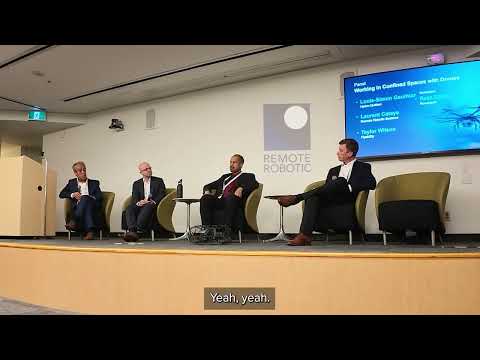
A ROAR West conversation with Imperial Oil's UAS expert on four drones flying simultaneously at Cold Lake, piloted from Calgary — and what remote, always-on coverage caught that daytime inspections never would.
Remote Robotic · October 22, 2026 · 5 min read
Watch the ROAR West conversation
Watch on YouTube ↗Four drones in the air, pilots in Calgary
Four drones, flying simultaneously, at a site hundreds of kilometers away from the people piloting them. That's the setup Imperial Oil has running today at its Cold Lake asset — and according to Nathan Workington, Imperial's UAS subject matter expert, it may be the first program of its kind in Canada.
"We have four operations in Cold Lake. Those are being flown out of Calgary," Workington told Remote Robotic's Laurent Cataye in a recent ROAR West conversation. "I think it's maybe one of the first of its kind in Canada to have four different drones being simultaneously flown across an asset" remotely.
Built on drone-in-a-box and radar detect-and-avoid
The program, built in partnership with Canadian UAVs, relies on a drone-in-a-box setup: fixed stations at Cold Lake that house the drones, paired with a radar-based detect-and-avoid system that allows beyond-visual-line-of-sight (BVLOS) flight — a regulatory requirement in Canadian airspace once an operator and the aircraft are no longer within direct line of sight of each other. The radar handles deconfliction; the pilots, sitting in a dedicated remote operations center in Calgary, handle everything else.
The gap it was built to cover
Why build it this way at all? Workington pointed to a simple operational reality: sites don't staff evenly around the clock. "Everyone goes home at 5:00 or whatever, right? So then you only have a few night operators, and night operations are always the lowest staffed points." Remote drone surveillance was built specifically to cover that gap.
What it found in the first six months
The result surprised even the team that built it. "Within the first six months of operating drones with that surveillance, with remote operation... we were already finding things that were happening kind of after everyone went home, and able to send the night operations folks there to intervene on those activities, which immediately brought value to the whole system."
That's a quietly significant finding: a surveillance capability justified on cost and efficiency grounds ended up catching real issues during the exact hours when human eyes on site were thinnest — issues that, by definition, would otherwise have gone unnoticed until the next shift arrived.
The two forces shaping how far this scales
Weather and regulation are the two forces shaping how far this can scale. Alberta's winters push drone operations hard: most commercial drones are only rated down to around -20°C, and radar-based detect-and-avoid systems lose effectiveness under cloud cover. "We've had the most challenging calendar year in the history of Alberta for operating robotics," Workington said of the past year's extreme cold, snow, and rain. Imperial is actively pushing vendors for -40°C-rated equipment and better radar performance through cloud cover, which would open up genuine 24/7, year-round flying — something Workington called "really untapped in a big way," since most drone programs today effectively shut down for the winter months.
The use case that matters isn't the long-range one
On the cost side, Workington offered a useful piece of nuance for anyone evaluating BVLOS investment: the long-range, many-kilometers use case that gets the most regulatory attention isn't necessarily where the value is for a site operator. "The long-range stuff... isn't really in our wheelhouse, because it's usually once a year," he said. What Imperial actually needs more of is affordable, localized BVLOS capability — radar and detection systems sized for a two-to-three-kilometer radius around a single site, rather than solutions built for covering vast distances. Imperial currently operates 36 field terminal sites across Canada, and the long-term vision is a drone-in-a-box at every one of them, viewable live by anyone in the organization.
The takeaway for operators
For any operator weighing a remote operations investment, the Imperial example suggests the real payoff isn't only the obvious one — flying more, for less. It's what remote, always-on coverage catches that a scheduled, daytime-only inspection never would.
That's the model our Remote Operations Center (ROC) program is built around: automated drones based on your site, licensed pilots overseeing every mission remotely, and industrial inspection solutions that run around the clock. If you're weighing a remote operations investment, ask us about a managed program.
ROC program
Talk to the ROC team
Shop the story
Related products in our catalog
Every product below is stocked and supported by Remote Robotic in Canada.